Carmel Valley, CA, carries a median home sale price hovering around $2.17 million as of mid-2026, with properties selling in just over two weeks. Carmel Valley Village sits within that broader region as its own distinct sub-area - different housing profile, its own daily rhythms, and its own set of local regulations that catch buyers off guard if they haven't done the homework. It consistently stands out among the best neighborhoods in Carmel Valley, CA.
What you'll find here is a mix of established properties, access to places like Garland Ranch Regional Park, and a commercial center that's genuinely useful day-to-day. Knowing what things cost, which schools serve the area, and exactly what the county allows you to do with a property matters before you make an offer.
An Overview of Carmel Valley Village
The Village functions as a central hub for the inland Carmel Valley region. The broader market posts median prices over $2 million and thin inventory, but the Village carries a somewhat different real estate profile worth understanding on its own terms.
One unusual piece of local history: the former Carmel Valley Airport - also known as the Carmel Valley Vintage Airfield - once occupied land here. It closed in 2002, and the site now serves as community space for recreation and emergency staging.
The Character of the Area
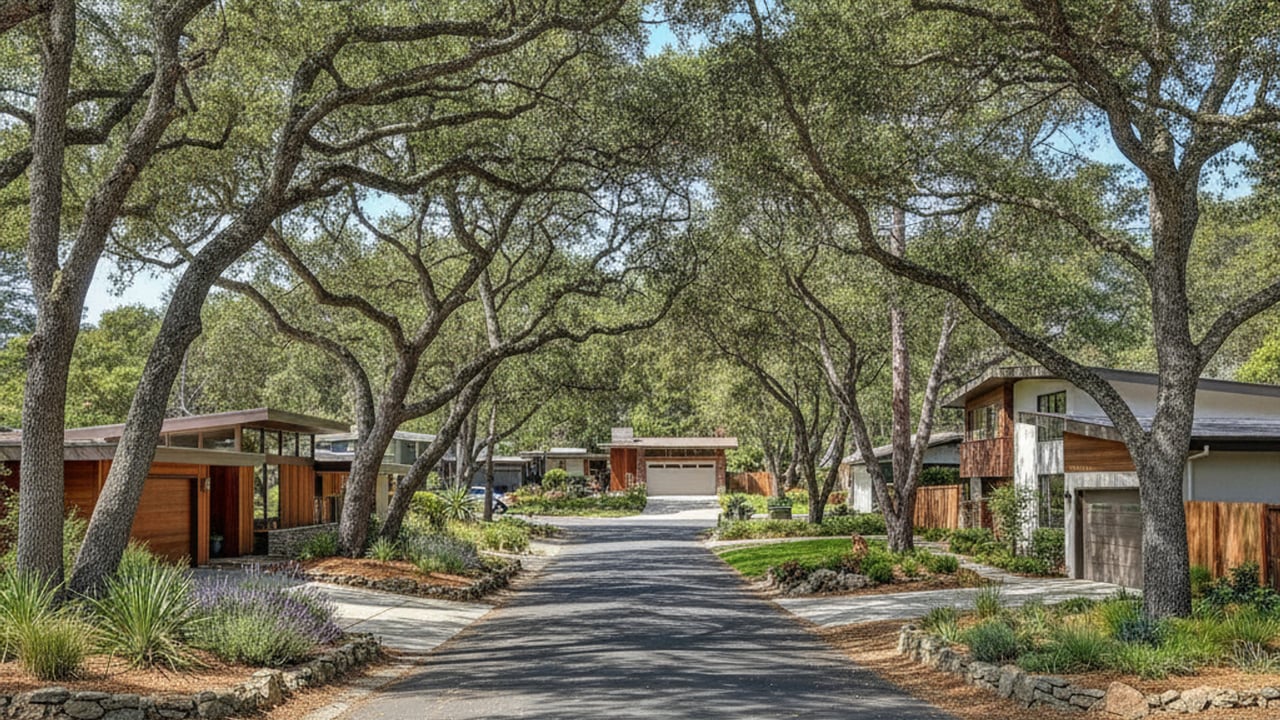
Residential streets branch off the main thoroughfares, and the homes themselves tend to integrate into the natural landscape rather than fight it. Lot sizes vary, and single-family homes are the norm.
Proximity to Garland Ranch Regional Park is one of the area's defining features. Hiking trails and open space are genuinely close, not just a talking point.
Connecting to the Broader Region
Carmel Valley Road is your primary route in and out. It's a two-lane road, and it's the connection between the inland properties and Highway 1 and the coastal cities - there's no shortcut. Drive times shift depending on the time of day and the season, which is worth factoring in if you're commuting regularly.
Real Estate and Home Prices in the Village
The broader Carmel Valley market doesn't wait around. Homes are selling in roughly 17 days, about 36 percent of properties are closing above list price, and inventory sits at only about 2.2 months of supply across the region. It's a tight market.
Within Carmel Valley Village specifically, the median home sale price was about $1.6 million as of March 2026 - a year-over-year decrease, though low sales volume in the immediate Village area can skew those numbers in either direction. Other recent estimates put the average home value somewhere between $1.28 million and $1.46 million, depending on the source and the timeframe.
Housing Types and Availability
You're not going to find large tracts of new construction here. The housing stock is mostly established single-family homes - ranging from modest mid-century houses to larger, updated estates on expansive lots. Some properties include acreage or carry specific zoning requirements that affect what you can do with the land.
HOA fees and rules apply in certain subdivisions, so reviewing those details on a property-by-property basis is essential before you get attached to a place.
Renting Versus Buying
The rental market here is limited. Most properties are owner-occupied or held by long-term tenants, and inventory turns over slowly. If you're hunting for a rental, you'll need to monitor listings consistently.
For buyers, working with an agent who knows the Village micro-market specifically - not just Carmel Valley broadly - makes a real difference. Off-market opportunities exist, and the pricing nuances between the Village and the rest of the valley aren't always obvious from the outside.
Daily Life: Dining, Weather, and Local Amenities
One thing people notice quickly when they move here from the coast: the weather is different. The Village sits inland and misses most of the marine layer that blankets the shoreline, so you get more sun and more warmth. That's not a minor detail - it shapes daily life in a way that residents tend to feel strongly about.
The Village also concentrates commercial amenities into a walkable central area. Everyday errands and dining don't require a drive to Carmel-by-the-Sea.
Restaurants and Wine Tasting
The commercial center has a genuine variety of restaurants, cafes, and everyday dining options serving both locals and visitors. More than 20 wine tasting rooms operate within the Village, which gives the area a particular social character that's hard to replicate elsewhere in the region.
Shopping and Everyday Services
Groceries, hardware, and basic daily needs can be handled within or just outside the Village. That matters when Carmel Valley Road is your one route out. For larger retail purchases or specialized services, you're looking at a drive into Monterey or Carmel-by-the-Sea.
Practical Information: Schools and Healthcare
Public education and healthcare in the Village operate at the regional level, shared with neighboring coastal and inland communities. Knowing where those boundaries fall affects commute planning as much as anything else.
School District Boundaries
Carmel Valley Village is served by the Carmel Unified School District (CUSD), headquartered in Carmel-by-the-Sea. CUSD covers the majority of the Village, along with sections of Del Monte Forest and Big Sur.
Within that system, Tularcitos Elementary School is located directly in Carmel Valley. From there, students typically move on to Carmel Middle School and Carmel High School. That said, always check the current attendance-zone maps against a specific address before assuming - boundaries can be more granular than a zip code suggests.
Nearby Hospitals and Medical Care
The primary hospital for Village residents is the Community Hospital of the Monterey Peninsula, located in Monterey, CA. It handles emergency services, critical care, and general medical needs for the region.
Salinas Valley Memorial Hospital and Natividad Medical Center - both in Salinas, CA - offer additional access for residents who need specialized care or a second option.
Short-Term Rental Rules and Investment Properties
If you're buying here as an investment property with short-term rental income in mind, you need to understand what changed in 2024 before you run the numbers. Monterey County enforces specific lodging regulations, and commercial vacation rentals are now banned entirely in the residential areas of Carmel Valley under an ordinance that took effect on October 14, 2024. That ban also covers Big Sur, Carmel Highlands, and Moss Landing.
This isn't a gray area. It's a straightforward restriction that reshapes the investment case for residential properties in the Village.
Vacation Rental Licenses
What is still allowed: homestays where the owner is present during the rental, and limited vacation rentals defined as three or fewer stays per year. Both are permitted countywide. All short-term rental operators in unincorporated Monterey County must obtain a vacation rental license and a county business license regardless of the arrangement.
Investment Property Considerations
The 2024 restrictions mean you can't count on year-round short-term rental income to carry a purchase here. The investment property market has shifted toward long-term leases and primary residences, and the local tenant pool draws from people working in the valley and in the nearby coastal towns.
If a property only makes sense with Airbnb-style income propping up the numbers, it probably doesn't make sense here.
Frequently Asked Questions
How does the real estate market in Carmel Valley Village compare to the broader Carmel Valley area?
The broader Carmel Valley region has a median home sale price of approximately $2.17 million. Homes in the Village area sit lower, around $1.6 million as of early 2026.
Can I legally operate a short-term vacation rental or Airbnb out of a home in Carmel Valley Village?
It depends on how you use the property. Commercial vacation rentals are entirely banned in the residential areas of Carmel Valley under a 2024 Monterey County ordinance. You can legally operate a homestay if you're present during the rental, or a limited vacation rental capped at three stays per year - provided you obtain the required county licenses for either arrangement.