Carmel, CA isn't one thing. Where a property sits - relative to Highway 1, relative to the water - shapes everything about what you're buying. Buyers comparing Hatton Fields and Carmel Point are really comparing two different versions of coastal California life: different lot sizes, different price points, different architectural traditions, different relationships to the shoreline. Both areas offer a strong alternative for anyone trying to find the best neighborhoods in Carmel Valley, CA.
The broader Carmel Valley region currently sees median sale prices around $2.17 million, with homes spending roughly 17 days on the market. Zoom in on Hatton Fields and Carmel Point, though, and that regional picture breaks apart fast. The contrast in property values and availability between these two neighborhoods is sharp enough that understanding it will save you a lot of wasted time.
The Geographic and Historical Layout
Both neighborhoods trace their roots to 1920s-era subdivisions, but they developed in very different directions. Hatton Fields originated in 1923 when Paul and Grace Flanders purchased a 233-acre estate and platted it into 99 building sites ranging from one-third of an acre up to three acres. The neighborhood sits inland, bounded by Highway 1 to the east, Hatton Canyon to the north and west, and Rio Road to the south.
Carmel Point developed historically as the Walker Tract, covering about 216 acres of the former Martin Ranch. It runs directly along the shoreline of Carmel Bay and stretches inland toward Hatton Fields - which means Carmel Point has the water as its western edge, while Hatton Fields occupies the more central, set-back position near the major roads.
Comparing Home Prices and Property Styles
Proximity to water is doing most of the pricing work here, and the numbers make that clear.
In Carmel Point, Redfin reported a median sale price of $7.1 million in March 2026 - a 181.6% year-over-year increase. Beachfront parcels can reach up to $40 million. Inventory is thin enough that sometimes only a single home sells in a given month.
Hatton Fields is a different conversation. Median sale prices run roughly $2.2 million to $2.4 million, with available homes typically listed between $1.7 million and $3 million. The per-square-foot gap tells the same story: Carmel Point averages about $3,120 per square foot; Hatton Fields averages roughly $948.
Architecture and Home Styles
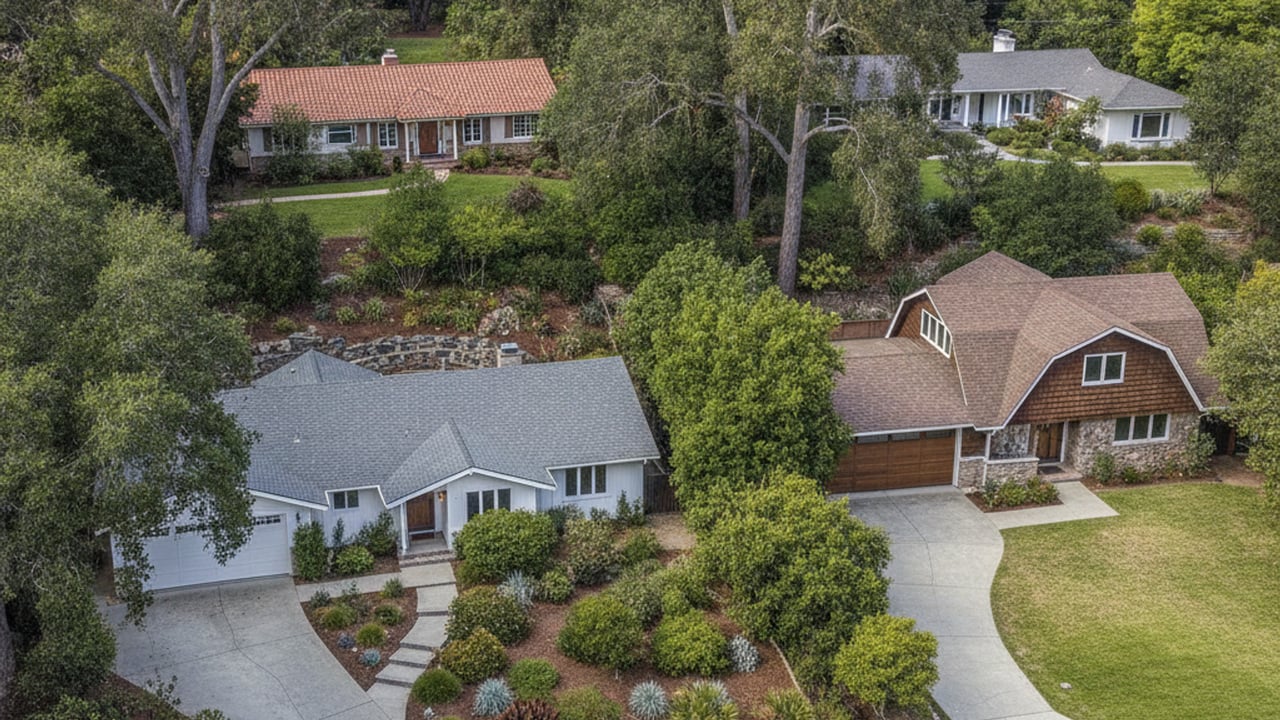
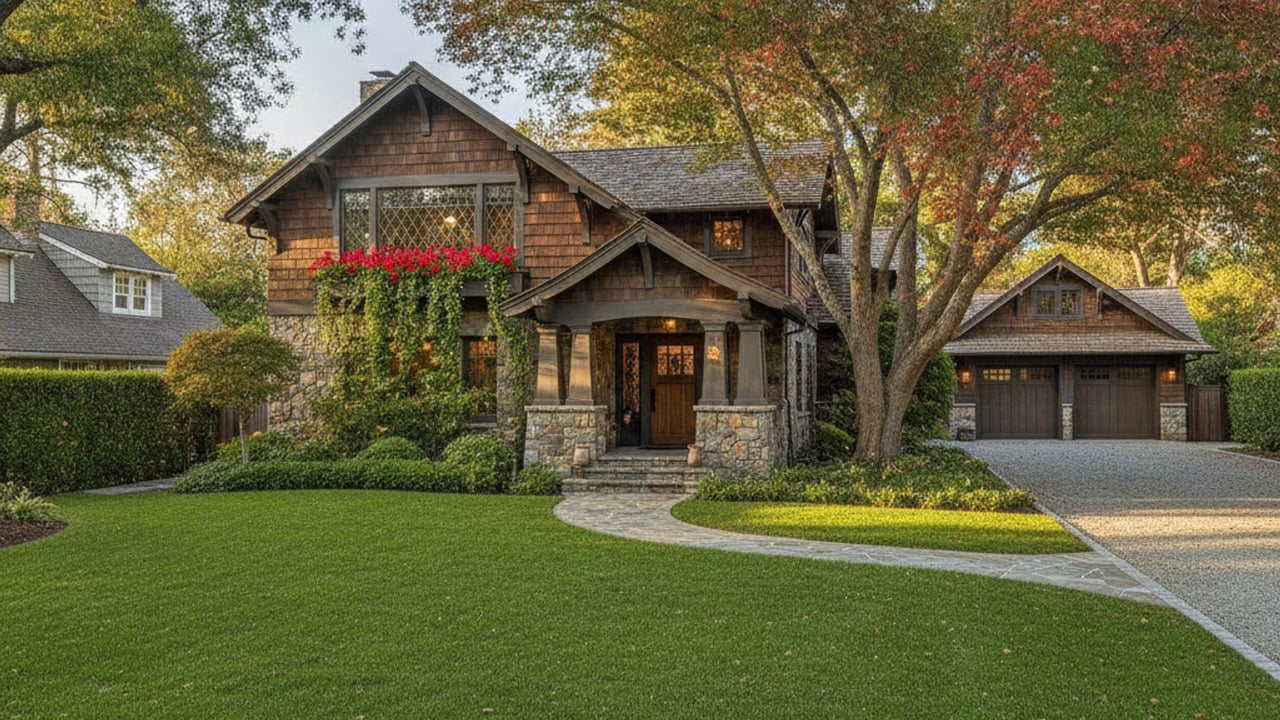
Hatton Fields features larger single-family estate homes, often ranging from 1,600 to 5,500 square feet with three to five bedrooms. The architecture leans toward Craftsman and mid-century designs, Spanish-style haciendas, stately traditional homes, and coastal ranch layouts - many with custom stone builds reminiscent of historic Carmel estates.
Carmel Point works on a tighter footprint: cottages, cabins, and condos, with historic Tudor-style examples sitting alongside new construction. Recent builds in the broader district include modern Spanish-style mansions and single-level homes with high-end finishes like Azul calcite and custom wood doors.
Lot Sizes and Privacy
Hatton Fields lots typically range from 0.30 to 1.28 acres - among the largest residential parcels in Carmel. The original 1920s zoning was designed for substantial setbacks, so you get real physical distance between neighboring properties.
Carmel Point lots often fall well under a quarter of an acre. One recent listing sat on just a 5,200-square-foot lot. Properties are packed close together, separated by thick trees, manicured shrubs, and white picket fences rather than lawn. If acreage is your priority, this isn't your neighborhood.
Daily Life, Parks, and Beach Access
Carmel-by-the-Sea is one square mile, which means neither neighborhood is far from anything. That said, the experience of daily life differs in ways that matter.
Carmel Point residents are immediately adjacent to the water - Carmel Beach is the neighborhood's western boundary. The stroll to downtown and the shoreline is genuinely short. Hatton Fields is set further back, still a walkable distance to downtown Carmel-by-the-Sea and Carmel Beach, but the walk is longer. The trade-off is quick access to Highway 1, which is useful if you're moving up and down the Monterey County coast regularly.
Trails and Outdoor Recreation
Both neighborhoods sit close to the Mission Trail Nature Preserve, a 33- to 34-acre preserved forest with three to five miles of hiking trails through pine and redwood trees. Hatton Fields is directly adjacent to the preserve, with immediate access to its five named paths: Flanders, Doolittle, Willow, Mesa, and Serra.
Carmel River State Beach is another shared amenity - a mile-long stretch that tends to be less crowded than the main Carmel Beach and is popular for bird watching and scuba diving. Hatton Fields residents are within walking distance of both this beach and the historic Carmel Mission.
Making Your Real Estate Decision
It really does come down to three things: budget, lot size, and water proximity.
If you want large, private estate lots with mature landscaping, Hatton Fields is the answer. The $2.2 million to $2.4 million median delivers more square footage and land for the investment. If immediate beach access matters more than acreage, Carmel Point is where you're looking - the $7.1 million median reflects exactly what that waterfront proximity costs, and the tight cottage-style lots deliver a classic coastal experience right on the edge of Carmel Bay.
Neither neighborhood is better. They're just built for different buyers.
Frequently Asked Questions
If I'm moving closer to the coast from Carmel Valley, does Hatton Fields or Carmel Point offer better daily weather and walkability?
Both neighborhoods offer strong walkability, but Carmel Point gives you a shorter, more immediate stroll to Carmel Beach and the heart of downtown. Hatton Fields is slightly further inland and still walkable to downtown, Carmel Beach, and the adjacent Mission Trail Nature Preserve. The available market data doesn't specify weather differences between the two areas.
What is the average price difference per square foot between homes in Carmel Point versus Hatton Fields?
Carmel Point averages about $3,120 per square foot as of March 2026. Hatton Fields averages roughly $948 per square foot. That gap reflects Carmel Point's immediate beachfront location and its smaller, higher-demand inventory.
Are Hatton Fields and Carmel Point subject to Carmel-by-the-Sea city regulations, or do they fall under unincorporated Monterey County rules like Carmel Valley?
The available data doesn't specify the exact municipal boundaries or zoning jurisdictions for these neighborhoods relative to unincorporated Monterey County. You'll want to verify that directly with the city of Carmel-by-the-Sea or the Monterey County planning department.
What are the specific water credit and remodeling restrictions buyers need to watch out for in Carmel Point compared to Hatton Fields?
The available market data doesn't detail specific water credit or remodeling restrictions for either neighborhood. A local real estate agent or the county planning office will be your best source for current building and water regulations.
How long do properties typically stay on the market in Hatton Fields versus the highly competitive Carmel Point neighborhood?
In Carmel Point, homes sell in about 38 days - a reflection of the thin market where sometimes only one home sells in a month. The broader Carmel Valley region averages roughly 17 days, though specific days-on-market data for Hatton Fields isn't detailed in the recent figures.
Which neighborhood is generally better suited for buyers prioritizing large, private estate lots over immediate beach access?
Hatton Fields. Lots range from 0.30 to 1.28 acres, originating from a 1920s estate subdivision designed for larger footprints. Carmel Point features much smaller, tightly packed lots that are often well under a quarter of an acre.