Carmel Valley carries a median sale price around $2.18 million as of mid-2026, and Rancho San Carlos sits well above that figure. Located just inland from the coast, this district is anchored by the gated Santa Lucia Preserve - a private, conservation-focused community that operates by its own rules. If you're looking for large parcels, genuine privacy, and a short drive to the Monterey Peninsula, this is one of the best neighborhoods in Carmel Valley, CA.
What you'll find here is a mix of multi-million-dollar estates, private lots, and members-only amenities. The housing stock, the daily rhythms, and the community's governing structure are all meaningfully different from anywhere else in the valley. So before you fall in love with a listing, it helps to know exactly what you're getting into.
What to Expect in Rancho San Carlos, Carmel Valley
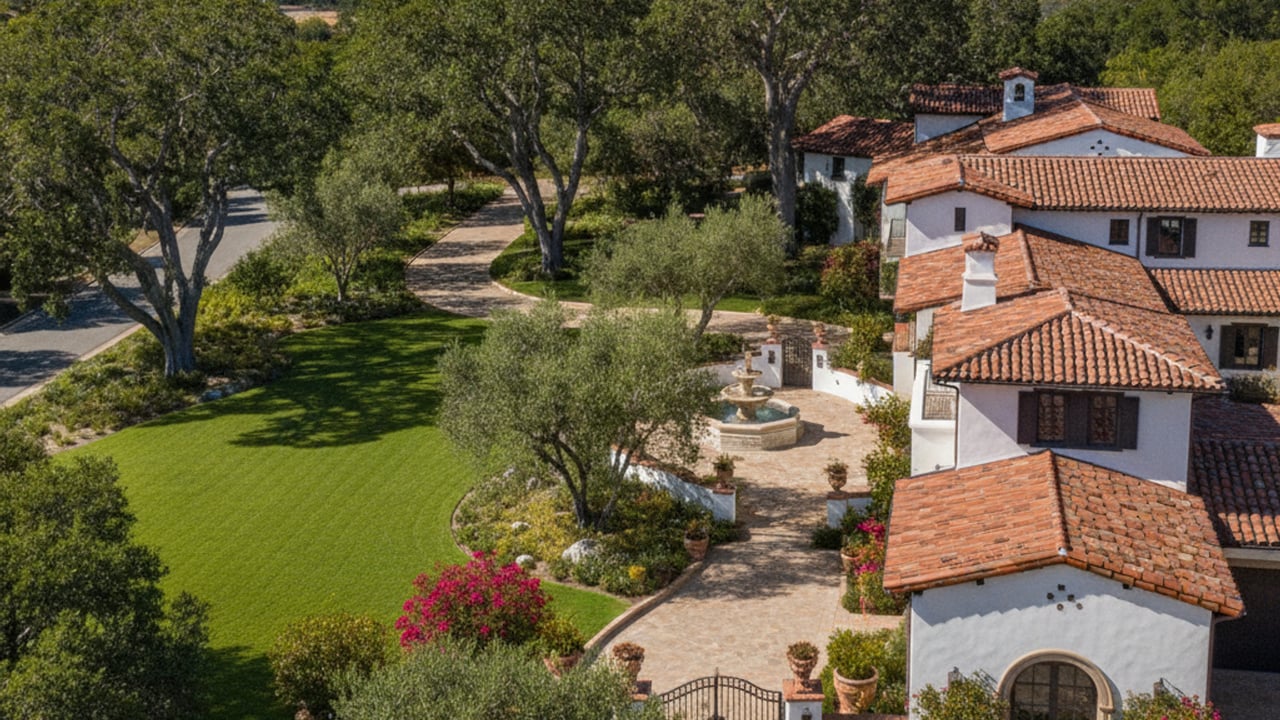
The entry point is the Carmel stone gatehouse on Rancho San Carlos Road, which connects the private estates to the public stretches of Carmel Valley. Once you're through the gates, the community's centerpiece is the Santa Lucia Preserve - historically known as Rancho San Carlos. The 1920s Spanish Colonial-style Hacienda, built by George Gordon Moore, anchors the social life of the neighborhood. And because the community places a heavy emphasis on land conservation, the vast majority of the acreage will never be developed.
Location and Landmarks
Rancho San Carlos Road winds south from Carmel Valley Road into the Santa Lucia Preserve. The landscape shifts from the main valley floor into rolling hills and dense oak woodlands, with elevation changes that open up varied sightlines across Monterey County.
The Hacienda is the primary gathering space for members. Properties are spread across thousands of acres of protected land, so your nearest neighbor isn't separated by a fence line - they're separated by forest.
Fitting into Carmel Valley
The broader Carmel Valley area has a range of suburban neighborhoods and rural properties. Rancho San Carlos is neither. It's strictly private and low-density, and it sits well apart from the commercial stretches of Carmel Valley Road where most valley businesses operate.
Residents head out to the main valley for groceries and everyday services. Inside the gates, daily life revolves around the Preserve's internal amenities. Buying here is a deliberate trade - rural and protected over convenient and traditional.
The Housing Market in Rancho San Carlos
The broader Carmel Valley market is moving fast in 2026. Homes are averaging just 17 days on market, inventory sits at roughly 69 available homes across the entire valley, and supply is at about 2.2 months. Around 36% of homes in the valley are selling above list price.
Rancho San Carlos sits at the top of this already expensive market. Because it's a specialized micro-area, properties trade less frequently than typical valley homes, and when they do come up, they almost always involve large acreage and custom construction. The buyer pool is narrow, but so is the inventory.
Current Prices and Market Trends
The valley-wide median of roughly $2.18 million doesn't tell you much about what you'll actually spend here. Recent sales along Rancho San Carlos Road include a five-bedroom home that closed at $5.5 million and a four-bedroom listing at $6.15 million.
The premium reflects more than the address. You're paying for the land, the infrastructure required to maintain these estates, and the value of the community's private amenities. There's no bargain entry point into the Preserve.
Home Types and Property Features
Every home here is a large, custom-built single-family residence on an expansive lot. Private gates, extensive outdoor living spaces, and guest houses are common. You won't find condominiums or attached townhomes inside the Preserve - that's not what this land is for.
Newer construction tends to blend modern elements with traditional Spanish Colonial or ranch styles, matching the historical aesthetic of the Hacienda. Lots are sold with designated building envelopes, which keeps new construction out of the protected natural habitats.
Dining, Transit, and Daily Life
Life inside Rancho San Carlos balances the isolation of a gated reserve with access to the broader valley. Personal vehicles are how residents get around - both across the large acreage and out to the Monterey Peninsula. Walking to a café isn't part of the picture.
To leave the Preserve, you head north on Rancho San Carlos Road to Carmel Valley Road, which connects to Highway 1. From there, Monterey and the coastal towns are a short drive. The internal roads are paved but wind through steep, forested terrain.
Local Restaurants and Everyday Dining
Inside the community, dining is private and members-only. Residents can eat at the historic Hacienda, The Preserve Golf Clubhouse, or grab something casual at the Nest. For anything public, you're heading out to Carmel Valley Road - nearby options include Lucia Restaurant & Bar, The Valley Kitchen, Cachagua General Store, and The Corkscrew Cafe.
Getting Around the Area
Public transit doesn't reach the private roads inside Rancho San Carlos. Cars are essential. The drive from the gatehouse to the inner reaches of the Preserve runs 15 to 20 minutes depending on where your lot sits, so if you're looking at a property deep inside the community, factor that internal commute into your daily math.
Schools, Medical Care, and Climate
Buyers relocating here often want to know how rural "rural" actually is for schools, hospitals, and weather. The honest answer is that the setting is remote, but the surrounding towns provide solid infrastructure. Residents use the same public services as the rest of Carmel Valley.
The inland valley location also creates weather patterns that differ from the immediate coastline - worth knowing before you assume Carmel Valley weather and Carmel-by-the-Sea weather are the same thing.
School Districts Serving the Area
Properties in this area fall within the Carmel Unified School District. Nearby public schools serving the district include Carmel Middle School and Carmel Valley High School. The broader area is also sometimes referenced under the Monterey County R-1 School District, which includes one local elementary school. For private options, All Saints' Day School is located a short drive from the main gate.
Nearby Hospitals and Healthcare
The nearest major hospital is Community Hospital of the Monterey Peninsula (CHOMP) at 23625 Holman Highway in Monterey, CA - a 258-bed acute care facility that has been operating since 1934 and serves the entire peninsula. Other medical centers in the broader service area include Natividad Medical Center in Salinas and Mee Memorial Hospital. Specialized appointments and emergency care generally mean a drive into Monterey or Salinas.
Local Weather Patterns
Rancho San Carlos runs warmer and sunnier than the foggy coastline in Carmel-by-the-Sea and Monterey. Summer highs often reach the 70s and 80s. Winter brings cooler temperatures and most of the area's annual rainfall. The elevation changes within the Preserve create microclimates - ridge tops see different wind patterns than the valley floor, which matters if you're comparing lots at different elevations.
Short-Term Rental Rules and Investment Properties
Monterey County updated its vacation rental rules as of October 14, 2024, and those changes apply directly to Rancho San Carlos and the Santa Lucia Preserve. If part of your plan is offsetting ownership costs with rental income, you need to review these regulations before you close - not after.
Vacation Rental Regulations
The county ordinance bans commercial, whole-house short-term rentals in the residential zones of Carmel Valley. You can't rent a home for less than 30 days more than three times a year. Limited vacation rentals - three or fewer per year - are still permitted, and homestays where the owner is present remain allowed. Any legal rental requires a discretionary land use permit, a $965 vacation rental license, a county business license, and payment of Transient Occupancy Tax.
What Rental Properties Look Like Here
Between the 2024 county ordinance and the gated nature of the Preserve, high-turnover vacation rentals simply don't exist here. Most owners use their homes as primary residences or private second homes. Long-term rentals of 30 days or more are an option for investors, though the market is small and targets a specific high-net-worth renter pool. Don't buy here expecting to run a year-round Airbnb operation.
Buying or Renting Your Next Home
Purchasing in Rancho San Carlos means working with people who understand private roads, land conservation easements, and luxury club memberships. Low inventory means you may wait a while for the right lot or estate to surface - but with homes averaging just 17 days on market across Carmel Valley, you also can't afford to hesitate once the right property appears. Get the HOA documents and membership requirements in front of you early so you're not scrambling when you find a match.
Current Homes for Sale
Available homes in Rancho San Carlos range from undeveloped parcels to fully completed equestrian estates. Move-in ready homes listed under $5 million in this specific enclave are rare. On top of the purchase price, factor in mandatory memberships or HOA dues - those recurring fees fund the gatehouse, the private roads, and the Hacienda facilities.
Working with a Local Agent
A local agent coordinates tours through the private gatehouse and walks you through the specific utility setups for each lot. Many homes here rely on specialized water systems and septic tanks that need professional inspections - that's not something you want to figure out after you're under contract.
Off-market listings are common in this corner of the Carmel Valley market, and an experienced agent tracks them. They'll also know how to structure an offer that accounts for the required club membership approvals, which is a step that catches a lot of outside buyers off guard.
Frequently Asked Questions
How much are the HOA dues and required club membership fees when buying a home in Rancho San Carlos, Carmel Valley?
It depends on the specific property and the level of club access you choose. Exact fees vary, but expect substantial monthly or annual dues that cover the private roads, security gatehouse, and the 1920s Hacienda facilities.
Do I automatically get access to the Santa Lucia Preserve golf and equestrian facilities if I purchase property in Rancho San Carlos?
No. Purchasing a home along Rancho San Carlos Road gets you into the community, but golf and equestrian club memberships typically require separate applications and initiation fees.
What are the specific design review restrictions and conservation easements for building a custom home on a Rancho San Carlos lot?
The community enforces design guidelines to ensure new builds match the historical and natural aesthetic of the Santa Lucia Preserve. Most of the thousands of acres are protected land, and development is restricted to designated building envelopes on each parcel.
How difficult is it to secure wildfire insurance and private water rights for estates in this part of Carmel Valley?
It can be challenging. Like much of inland California, Rancho San Carlos sits in an area where wildfire insurance often requires specialized state or private policies. Water rights depend on the specific well and municipal connections for that lot.
How does buying a home in Rancho San Carlos compare to other luxury gated communities in Carmel Valley like Tehama or Quail Lodge?
Rancho San Carlos is known for its massive acreage, historical 1920s Hacienda, and deep integration with the Santa Lucia Preserve's protected lands. It generally offers larger, more secluded lots than the golf-course-adjacent homes at Quail Lodge.
How long does it typically take to sell a luxury estate in Rancho San Carlos given the specialized buyer pool?
While the broader Carmel Valley market sees homes sell in roughly 17 days, luxury estates in Rancho San Carlos can take longer. The multi-million-dollar price points and specialized club requirements narrow the pool of potential buyers considerably.