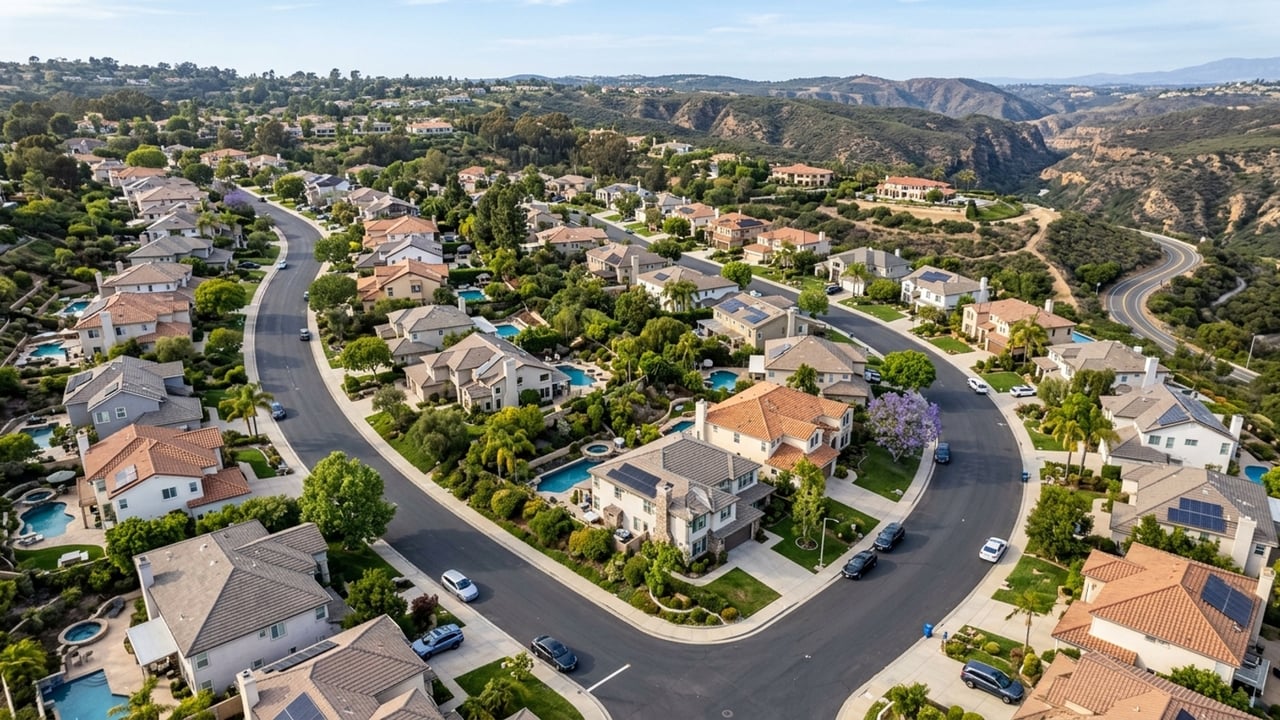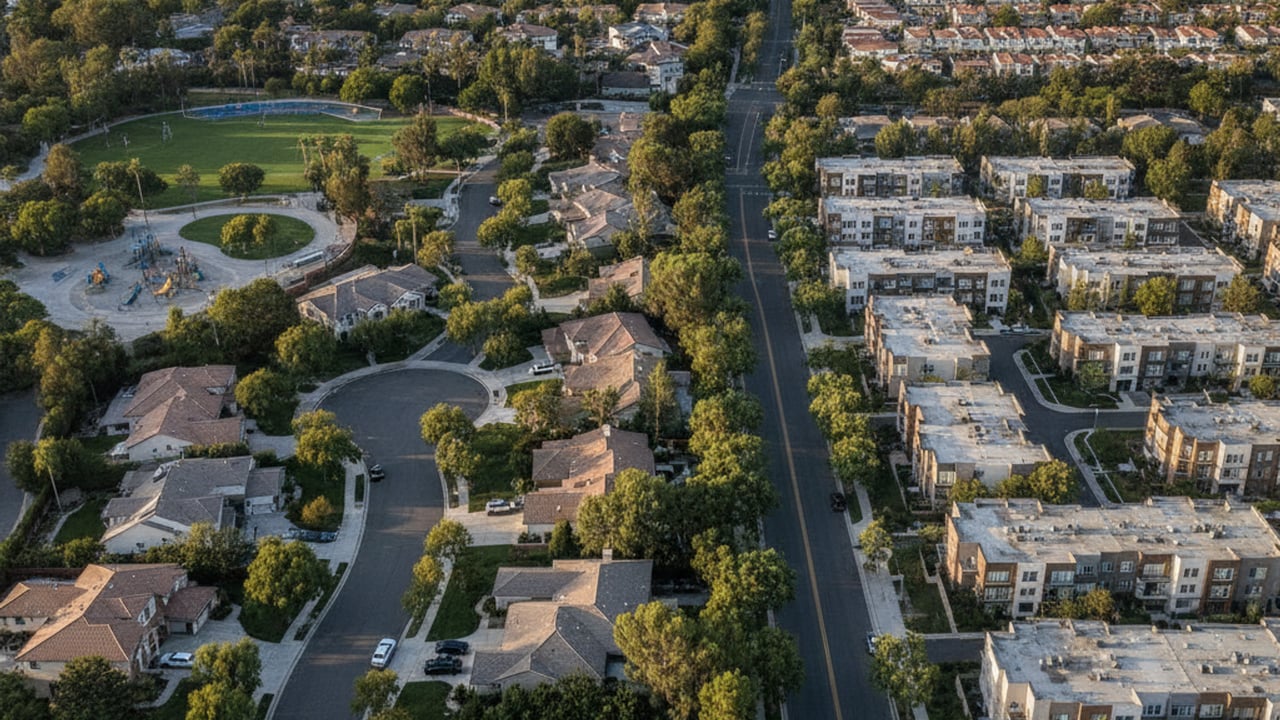
If you're buying a home in Carmel Valley, CA or selling one right now, you're dealing with a market that doesn't give you much time to think. Data from mid-2026 shows homes moving in just over two weeks, and the median sale price sits around $2,100,000 - up roughly 10.5% from the previous year.
Limited inventory and strong demand make accurate pricing critical whether you're on the buying side or the selling side. One more thing worth getting straight before we go any further: this data reflects the San Diego neighborhood of Carmel Valley. Buyers shopping statewide will find an entirely different set of metrics in the identically named village in Monterey County.
Overview of the Local Market
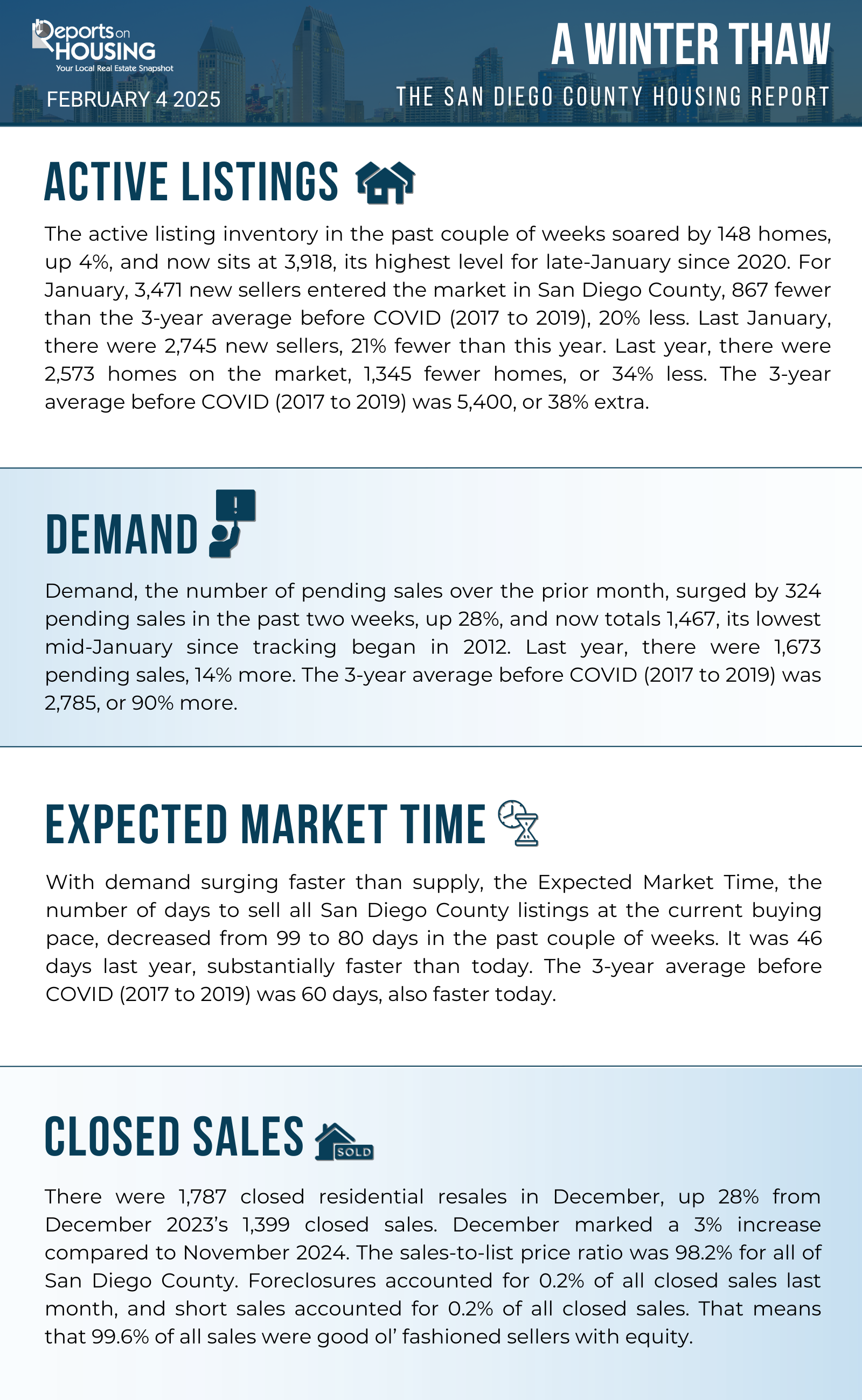
Around 60 active listings are on the market at any given time - that's a tight supply given current demand. Recent MLS data recorded 78 properties closing in a single month, which tells you buyers are still transacting at volume even at these price points. Sellers hold a clear advantage right now: about a third of recent sales closed above asking, and the average sale-to-list ratio is nearly 100%. If you're a buyer, assume you'll face competition on anything priced correctly.
Buyer and Seller Dynamics
Sixteen days. That's the median time a home sits on the market here, and it means you don't have the luxury of a long deliberation period. Tour fast, decide faster.
Sellers who prepare well see immediate interest - that part is straightforward. What's less obvious is how sharply location changes the equation. Buyers looking at the Carmel Valley Village in Monterey County will find the pace considerably slower; the village area historically reports average market times closer to 56 days. Same name, very different experience.
Median and Average Home Prices
In the San Diego neighborhood of Carmel Valley, the median sale price comes in at approximately $2,100,000 as of mid-2026. That's the number most local buyers are working against.
Zoom out and the picture shifts. The Zillow Home Value Index places the average home value for the Carmel Valley area at roughly $1,462,791 - reflecting a slight 2.6% dip over the past year. Averages pull differently than medians, and broader regional data and varying property types both affect where that number lands.
Price Per Square Foot and Neighborhood Values
Square footage costs swing widely depending on location and condition. Historical data for Carmel Valley Village in Monterey County showed median list prices around $929 per square foot, with some closed sales reaching $1,380 per square foot.
If you're writing an offer in a specific ZIP Code - say, 92130 - pull the comparable sales for that street, not just the broader area. A local agent can give you the exact price-per-square-foot metrics you need so your offer actually reflects what that specific block is doing.
Recent Sales Trends and Inventory
The 10.5% year-over-year increase in median sale price reflects demand that's holding up against limited supply. With only 60 active listings in circulation, there's not enough inventory to ease price pressure in the near term.
That said, not every corner of this market behaves the same way. March 2026 data for the Monterey County village area showed a median sale price of $1.6 million - a year-over-year decline driven by low sales volume in that specific rural market. One data point, very different story.
How Long Homes Stay on the Market
The median days on market in the San Diego Carmel Valley area is 16 days. You need your pre-approval letter before you tour, not after.
Anything sitting beyond three weeks is usually dealing with a pricing issue or a condition problem. Sellers should track that 16-day mark carefully - if you're not under contract by then, your strategy probably needs adjusting.
Forecasts and Future Projections
Forecast models point to steady growth for the broader Carmel Valley market over the next several years. The local median has already crossed $2.1 million, but longer-range appreciation models are working off a wider data set.
Forecast data from WalletInvestor previously placed the median price of an average house in the broader Carmel Valley market at roughly $1,158,132 in late 2025. Their models predict a long-term increase to $1,258,762 by 2030 - an 8.7% five-year investment gain.
Assessing the Investment Potential
The bubble question comes up in every conversation. Here's what the data actually says: 78 sales closed in a single recent month, which means buyers are willing and able to transact at current prices. That's not a bubble signal - that's a functioning market.
Focus on your own hold period rather than trying to catch a short-term dip. Timing this market precisely is harder than it looks from the outside.
Cost of Living and Income Alignment
A $2.1 million purchase requires either substantial earning power or accumulated equity - often both. The estimated median household income in the Carmel Valley area (93924) was recorded at $135,793 in 2024, up from $70,313 in 2000.
Property taxes, homeowners insurance, and potential homeowner association dues all stack on top of the base mortgage payment. Run the full carrying cost calculation before you decide what you can afford, not just the purchase price.
What Buyers Need to Know About Affordability
Jumbo loans are the norm for single-family home purchases here, and many buyers put down more than the standard 20% specifically to keep monthly payments workable.
If you're a first-time buyer, condominiums and townhomes in the area offer lower entry points while still giving you access to the same local amenities. It's worth running those numbers alongside the single-family options before you decide where to focus your search.
Practical Tips for Buyers and Sellers
In a market where homes sell in just over two weeks, preparation isn't optional - it's the whole game. Sellers should handle minor repairs, touch up paint, and stage before hitting the MLS. Buyers need financing sorted before they start touring.
Some real estate professionals recommend what they call the 3-3-3 rule for buyers: spend three months researching the market, tour three distinct neighborhoods, and secure pre-approval from three different lenders. It's a structured way to avoid making a rushed decision in a market that's actively pressuring you to do exactly that.
Working With Local Professionals
Raw data only tells you so much. An experienced local agent can explain why one side of a street commands a premium or flag upcoming municipal projects that could affect property values down the road.
On the financing side, work with a mortgage broker who understands jumbo loan underwriting specifically. Having your financing fully underwritten before you make an offer matters more than most buyers realize - especially when you're competing against the 33% of purchasers who are currently paying above asking price.
Frequently Asked Questions
Is Carmel Valley, CA currently considered a buyer's or seller's market?
Sellers have the upper hand right now. Homes sit on the market for a median of just 16 days, and roughly a third of recent properties sold above their asking price.
How long does it typically take to sell a home in Carmel Valley right now?
In the San Diego neighborhood of Carmel Valley, the median is 16 days. In the more rural Carmel Valley Village in Monterey County, average market times run closer to 56 days - a significant difference driven entirely by location.
What are the hidden costs or extra fees associated with buying a home in Carmel Valley, CA?
Beyond the purchase price, budget for property taxes, homeowners insurance, and potential homeowner association dues. All three add directly to your monthly carrying costs and affect what you can realistically afford.