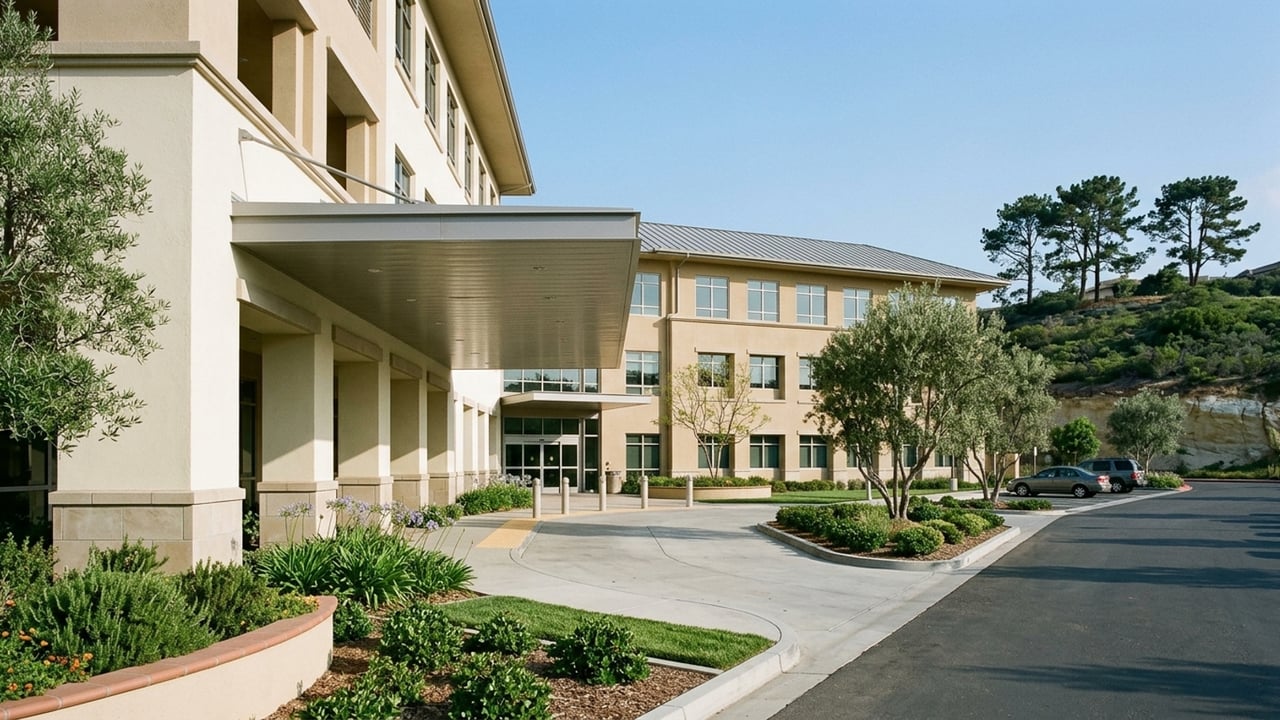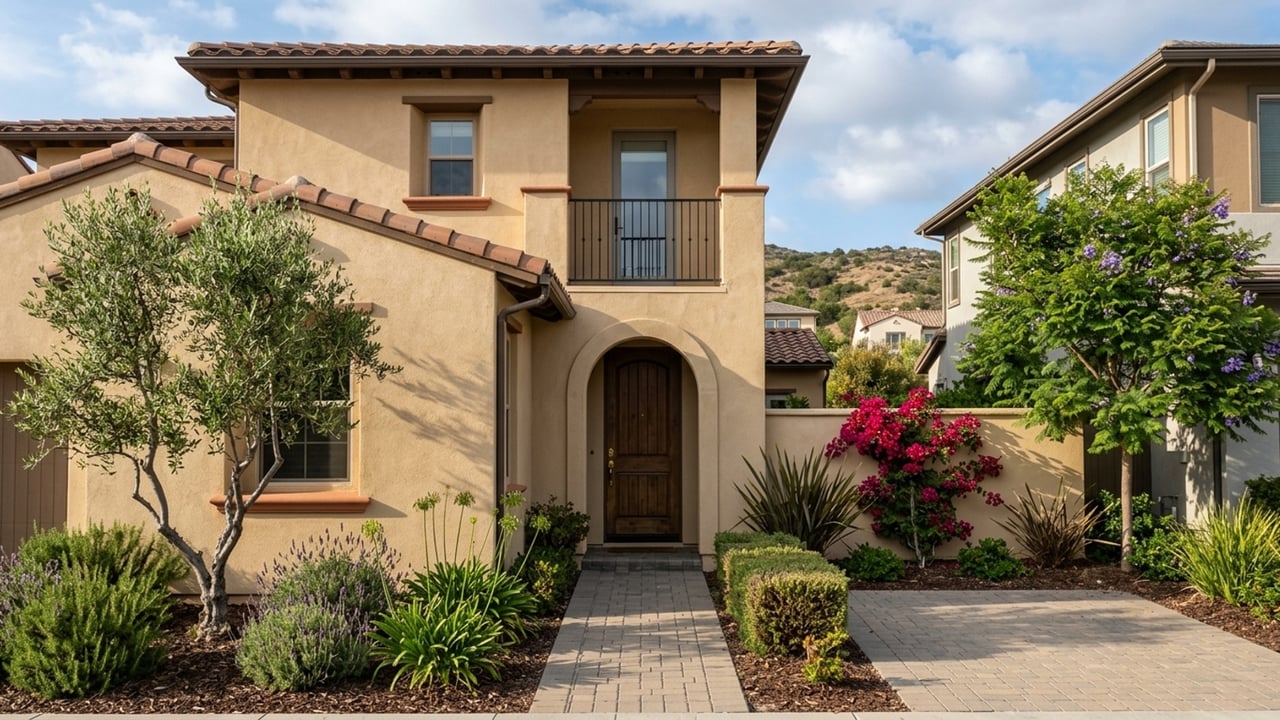
San Diego County doesn't give you one housing market - it gives you several, and they don't have much in common. Living in Carmel Valley puts you in the northwestern corner of the county: modern, master-planned, and wired directly into the I-5 corridor. La Mesa is about nine miles east of downtown San Diego, built on older residential tracts with a historic village at its center. Same county, very different experience.
If you're deciding between the two, you're weighing three things: how much you want to spend, what kind of house you want to live in, and how far you're willing to drive to work every morning. The numbers below should make that decision a lot clearer.
Carmel Valley and La Mesa Home Prices
The median sale price in Carmel Valley is currently around $1.89 million. La Mesa's median generally sits between $850,000 and $900,000. That gap isn't arbitrary - it reflects location premiums, proximity to the coast, and access to major tech employment centers in the northern part of the city.
In both areas, property type moves the needle. Detached single-family homes pull the median up; attached condos and townhomes bring it back down. That's true everywhere in San Diego County, but it's worth keeping in mind when you're comparing listings across these two markets.
Carmel Valley Sale Trends
Carmel Valley homes are moving fast. The median days on market is roughly 22, and in August 2026 the area saw 108 homes sold - about 36% of which closed above the initial list price. Condos typically list between $719,000 and $900,000, while single-family homes frequently exceed $2.3 million.
Inventory sits at about 1.8 months of supply. That's tight. Come prepared to compete.
La Mesa Sale Trends
La Mesa's median for all home types hovers near $850,000 to $900,000, though some listing aggregators report figures closer to $1.1 million when the sales mix shifts toward larger single-family properties. Which number you encounter will depend on where you're looking and what's been selling that month.
Prices also shift depending on where in the city you're shopping - proximity to the downtown village or elevated areas like Mount Helix both factor in.
Property Taxes and Homeowner Association Dues
Carmel Valley has a cost that catches some buyers off guard: Mello-Roos special taxes. Many of the newer developments in the 92130 zip code carry them, and they can push the effective property tax rate toward 1.5% or higher in certain tracts. On top of that, HOA dues for townhomes and condos typically run between $98 and $600 per month depending on shared amenities like pools or gated security.
La Mesa is an older, established city with few or no Mello-Roos districts. Effective property tax rates there stay closer to California's base of 1.1% to 1.25%. Many single-family homes in La Mesa carry no HOA at all - though if you're looking at attached units, expect fees roughly in line with the county median of $389 per month.
Home Styles and Neighborhood Layouts
The physical character of these two areas is shaped almost entirely by when they were built. Carmel Valley was developed with a plan: distinct subdivisions, wide arterial roads, designated commercial zones. La Mesa grew over a much longer period, and it shows - in a good way, depending on what you're after.
Streets in La Mesa tend to follow the natural topography of the East County hills rather than a grid. Lot shapes and property lines are inconsistent. That's either appealing or inconvenient, and buyers usually know which camp they fall into pretty quickly.
Master-Planned Communities in Carmel Valley
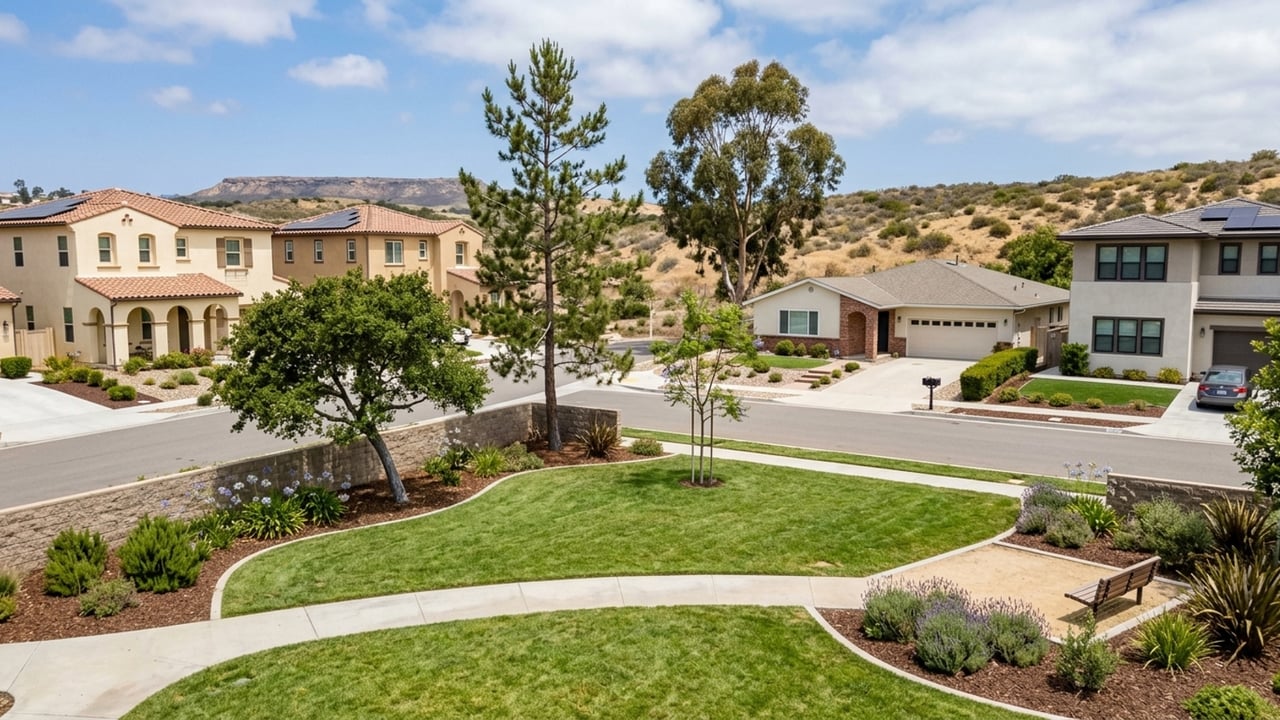
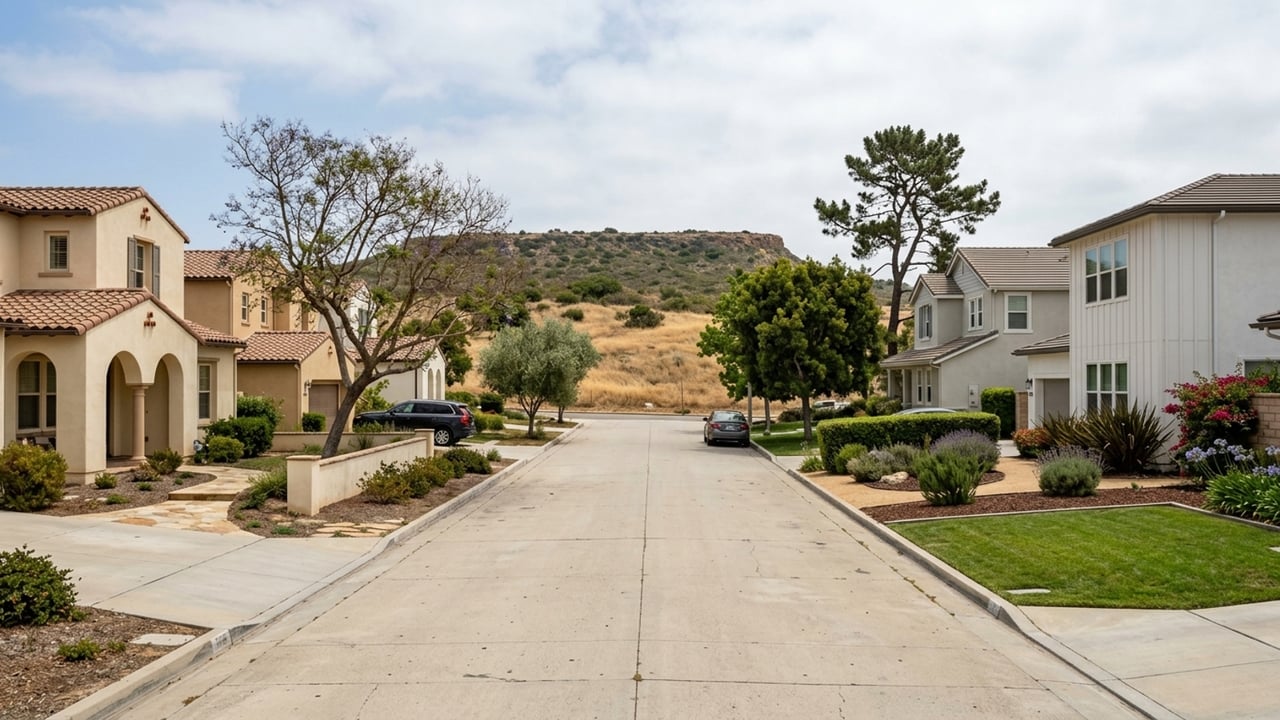
Carmel Valley is tract homes, modern builds, and structured subdivisions. Exterior styles and landscaping follow specific guidelines, so the neighborhoods have a cohesive look throughout. You'll find a high concentration of large, two-story single-family homes alongside dedicated complexes for townhomes and condominiums. Residential streets are separated from major retail corridors by design.
If you want a newer home with modern finishes and a predictable neighborhood layout, this is where you'll find it.
Varied Architecture in La Mesa
La Mesa's housing stock includes mid-century designs, early-1900s craftsman homes, and custom builds - the kind of variety that's genuinely hard to find in newer North County developments. Some properties sit on steep hillsides near Mount Helix; others are arranged on traditional grid streets near the center of town.
Lot sizes are inconsistent. That inconsistency is exactly what appeals to buyers who want something that doesn't look like the house next door.
Commutes and Transportation Access
Carmel Valley connects directly to I-5 and SR-56. La Mesa commuters rely primarily on I-8 and SR-125. Where you work should factor into this comparison - the two communities send you in very different directions.
La Mesa also has something Carmel Valley doesn't: access to the San Diego Trolley system, which gives residents a genuine public transit alternative for downtown commutes.
Driving from Carmel Valley
A typical drive from Carmel Valley to downtown San Diego takes roughly 20 to 30 minutes via I-5, depending on traffic. The real advantage here is how close the area sits to northern employment hubs. Residents driving to Sorrento Valley or the UTC/La Jolla biotech corridor can usually expect a 10 to 15-minute trip. SR-56 also provides a direct route eastbound toward Kearny Mesa and inland communities.
Driving from La Mesa
La Mesa is about nine to ten miles east of downtown San Diego, with an average overall commute time of roughly 22 minutes via I-8. That's comparable to - and sometimes shorter than - the drive from Carmel Valley into the city center or the East Village.
The tradeoff is distance from the north. Buyers working in Sorrento Valley or around UTC will face a noticeably longer daily drive from La Mesa.
Local Amenities and Commercial Centers
The commercial character of these two areas reflects the same divide you see in the housing stock. Carmel Valley is built around newer, upscale retail complexes. La Mesa holds onto its historic downtown, with independent storefronts and established community parks.
Both areas offer walkability within their respective commercial zones, just in very different flavors.
Carmel Valley Shopping Centers
One Paseo is the anchor - a walkable lifestyle center with boutique shops and restaurants including North Italia, Shake Shack, and Tocaya. Del Mar Highlands Town Center sits nearby with additional retail and multiple grocery options within a five-minute drive. For outdoor recreation, residents have access to extensive parks, local trails, and the nearby Torrey Pines State Natural Reserve. Schools in the area are served by the Del Mar Union and San Dieguito Union school districts.
La Mesa Village and Parks
La Mesa Village is the city's primary commercial and social center - a historic downtown stretch with restaurants, coffee shops, and local businesses in older storefronts. Mount Helix Park offers expansive views of San Diego County from its elevated amphitheater. These established civic spaces are a big part of why La Mesa ranks among the top San Diego-area suburbs for livability.
Common Questions About Carmel Valley and La Mesa
What is the difference in home prices between Carmel Valley and La Mesa?
Carmel Valley's current median sale price is around $1.89 million. La Mesa's median generally ranges between $850,000 and $900,000.
What types of homes are available in Carmel Valley vs La Mesa?
Carmel Valley is primarily modern tract homes, large single-family properties, and townhomes in master-planned subdivisions. La Mesa offers a wider range of older architectural styles - mid-century and craftsman homes on varied lot sizes.
How do commute times compare between Carmel Valley and La Mesa?
Both areas offer a roughly 20 to 30-minute drive to downtown San Diego. Carmel Valley has a much shorter 10 to 15-minute commute to northern employment hubs like Sorrento Valley and UTC. La Mesa provides direct access to the central city via I-8 and the trolley system.
Do buyers pay more in HOA and Mello-Roos fees in Carmel Valley, San Diego compared to La Mesa?
Yes. Carmel Valley has many newer developments subject to Mello-Roos taxes, and condo or townhome HOA fees often range from $98 to $600 per month. La Mesa is an older city with few or no Mello-Roos districts, and many of its detached homes carry no HOA fees.
How do the local amenities in Carmel Valley compare to La Mesa?
Carmel Valley amenities center on newer, upscale retail complexes like One Paseo and Del Mar Highlands Town Center. La Mesa revolves around La Mesa Village - its historic downtown area with older storefronts, independent restaurants, and coffee shops.
Which area offers better access to downtown San Diego and the beaches, Carmel Valley or La Mesa?
La Mesa is physically closer to downtown, sitting about nine to ten miles east along I-8, which can make for a slightly shorter drive to the city center. Carmel Valley is further north but closer to the coast, with faster access to the beaches and Torrey Pines State Natural Reserve.