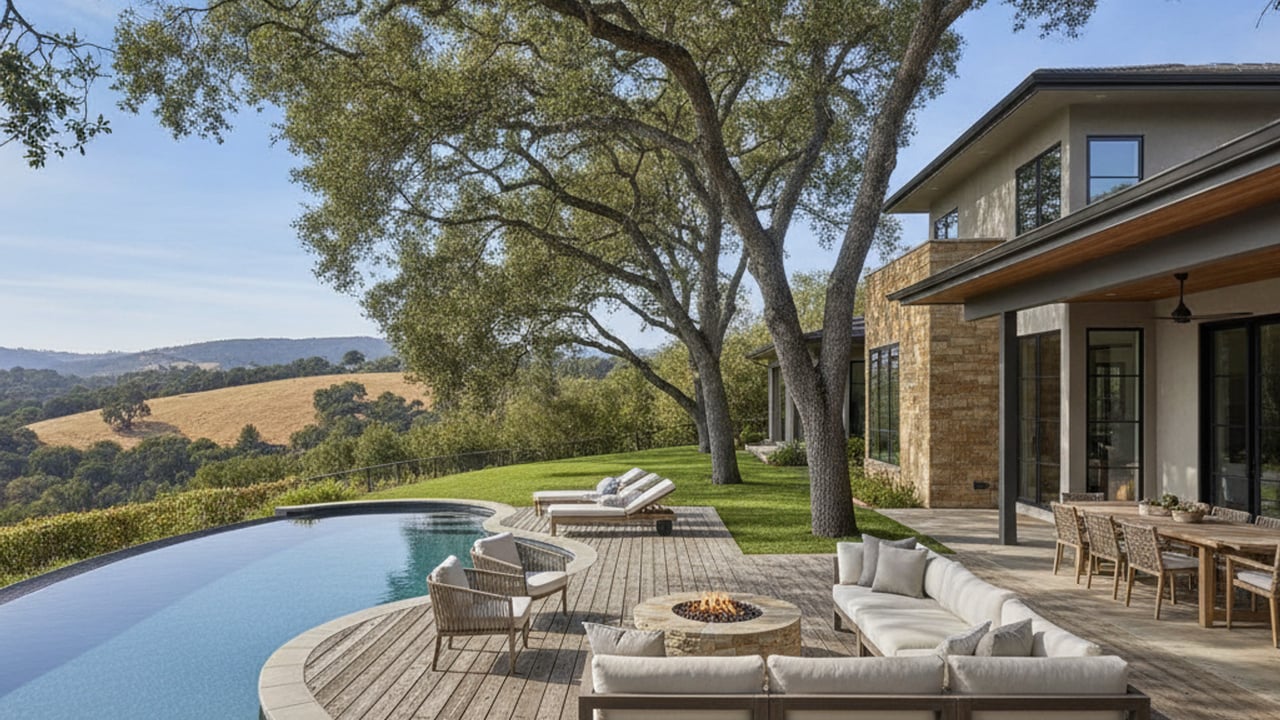
Carmel Valley, CA hands you a very specific set of financial and lifestyle tradeoffs if you're thinking about relocating here this year. The median sale price sits around $2,100,000, homes are spending an average of just 16 days on the market before selling, and there are only about 60 active listings at any given time. That combination - high price, fast pace, thin inventory - tells you a lot about buying a home in Carmel Valley, CA before you've even seen a single property.
Getting past the surface appeal of the California coast matters here. Housing costs, natural hazard exposure, commute times, community amenities - none of it is simple. What follows is a straightforward look at what you're actually weighing.
The Quick Verdict on Carmel Valley
The cost of living index for Carmel Valley sits at 122.3, well above the national average of 100. Median home prices exceed $2 million, and properties are selling at 99.9% of their list price - which means you're paying full price. Renters aren't getting a break either, with median rent prices around $2,211 per month.
That's the financial baseline. Whether the climate, housing stock, and proximity to major employment centers justify those numbers is the question you need to answer for yourself.
Pros at a Glance
The real estate market here is stable and liquid. Homes sell in roughly 16 days, which reflects consistent, established demand rather than a speculative spike. For buyers, that kind of market signals durability. For sellers, it means you're not sitting around waiting.
Cons at a Glance
The cost of entry is steep - both for housing and for everyday expenses. Natural hazards are also a real factor: data shows that 100% of properties in the nearby Carmel area face some level of wildfire risk. That's not a footnote; it affects your insurance options and your carrying costs.
Location and County Details
Carmel Valley is an unincorporated community in Monterey County, California. It sits about 13.8 miles from Salinas, CA - the nearest city - which connects you to the broader Salinas/Monterey metro region. San Jose is roughly 59.8 miles away, so a daily commute to the Bay Area is possible, but you should go into that with clear eyes about what "possible" means in practice.
These distances aren't just trivia. They shape how much of your day you spend in a car getting to work, a doctor's appointment, or a decent grocery store.
County and Proximity
Because Carmel Valley is unincorporated, Monterey County handles most municipal services. Law enforcement comes from the Monterey County Sheriff's Office, not a local city police department - a distinction worth understanding before you close.
Population and Size
The 2020 census recorded a total population of 6,189 for the Monterey County Census County Division covering Carmel Valley. More recent American Community Survey data puts that number at 6,129. Stable, low-density, and not growing quickly - that profile suits some buyers and rules it out for others.
Crime Statistics and Data
NeighborhoodScout reports a combined violent and property crime rate of 3 per 1,000 residents. That figure is lower than 80% of U.S. communities and falls below the rates of nearly 92% of California cities and towns. The underlying data comes from FBI Uniform Crime Report analysis.
Law enforcement, as noted, falls under the Monterey County Sheriff's Office given the community's unincorporated status.
Published Crime Rates
Published figures give you a more reliable foundation than neighborhood chatter. The rate of 3 incidents per 1,000 residents lets you make a real comparison against neighboring Monterey County towns like Salinas or Carmel-by-the-Sea, rather than relying on impressions.
Researching Local Data
Don't stop at the summary numbers. The Monterey County Sheriff's Office maintains an online portal listing county police departments and contact information, so you can pull up-to-date reports for a specific address before you make an offer.
Cost of Living and Housing Prices
The market here moves fast and doesn't discount. As of mid-2026, the median sale price is approximately $2,100,000 - a 10.5% year-over-year increase. Out of 78 homes sold recently, about one-third closed above asking. The average sale-to-list ratio of 99.9% means sellers aren't blinking, and with only 60 active listings, they don't have to.
You should plan to pay full price. That's not pessimism - it's just what the data shows.
Home Prices and Rent
If buying isn't the immediate path, median rents in Carmel Valley Village run around $2,211 per month. That said, the vast majority of residents here own rather than rent, so the rental inventory is limited to begin with.
Everyday Expenses
Housing is the headline, but it's not the whole story. AreaVibes lists a cost of living index of 216 for Carmel Valley Village - 55% higher than the California average. Groceries, utilities, transportation - all of it runs higher here. Budget accordingly.
Population and Community Facts
Census Reporter's 2024 American Community Survey 5-year estimate puts the median household income for the Carmel Valley area at $143,510. That's a significant increase from the year 2000, when the median was closer to $70,313. City-Data estimates the 2024 figure slightly lower at $135,793. Either way, the population here has substantial earning power - which tracks with the housing costs.
Growth and Age Profile
With just over 6,100 residents, this is a small-town environment by any measure. The lack of rapid population growth keeps density low and limits pressure on local infrastructure. For buyers who want that to stay that way, it's reassuring. For buyers hoping to see more services and amenities develop, it may be a limitation.
Income and Earnings
The local median income figures are worth keeping in perspective. Qualifying for a mortgage on a $2.1 million home requires earnings well above $143,510. Your debt-to-income ratio matters here more than in most markets.
Climate, Amenities, and Things to Do
Here's where the picture gets complicated. Redfin and First Street data show that 100% of properties in the nearby Carmel area face some wildfire risk, earning the region a major wildfire risk rating. Separately, 18% of properties carry a moderate risk of severe flooding over the next 30 years. Monterey County also has a predicted average indoor radon screening level between 2 and 4 pCi/L, indicating moderate potential for radon exposure.
These aren't reasons to walk away automatically, but they are reasons to do your homework before you make an offer.
Natural Hazard Exposure
Wildfire risk affects your insurance options directly. Securing a policy in a high-risk California zone often means purchasing coverage through the FAIR Plan, which changes your monthly carrying costs in ways you need to factor into your budget upfront.
Utilities and Water Quality
Water infrastructure is something buyers here should look at carefully. The Cachagua Mutual Water System, which serves 55 people via groundwater, reported a coliform monitoring violation in April 2011. That history is a reminder to inspect private wells or local utility reports - not assume everything is fine because it's a high-priced area.
Comparing Carmel Valley to Nearby Areas
Salinas, 13.8 miles away, is an incorporated city with denser housing inventory and centralized city services. It's a genuinely different environment - more urban infrastructure, a different market altogether. San Jose, roughly 60 miles out, is the large metropolitan alternative if you're weighing whether to be in a rural unincorporated community versus a traditional suburban setting.
Neither comparison is meant to push you in a direction. They're just the relevant reference points.
Commute and Access
The drive to Salinas takes you out of the coastal hills and into the valley's agricultural hub. The 60-mile drive to San Jose is a real commute - daily trips to Silicon Valley represent a major time commitment that should factor into how you think about quality of life here.
Housing Types
Carmel Valley is primarily single-family homes on larger lots. If you're looking for condominium complexes or dense townhome communities, you'll find more options near Salinas or San Jose. That's not a knock on Carmel Valley - it's just what the inventory looks like.
Specialized Housing Options
With only 60 total listings in the market, specialized property types are scarce. Finding senior living or assisted living in Carmel Valley means searching a market that's almost entirely single-family homes. The same goes for sober living - the rural nature of the community pushes many support services closer to Salinas or Monterey.
Senior and Assisted Living
Older adults evaluating the area should pay close attention to how far any prospective home sits from medical facilities. The community is spread out, and access to daily assistance or specialized care typically means driving to a neighboring incorporated city.
Sober Living Programs
Facility availability here depends on local zoning and what's actually registered in the unincorporated limits. Your best starting point is contacting Monterey County health services directly to find out what's available and where.
Local Amenities by Life Stage
Carmel Valley includes Tularcitos Elementary, which serves 248 students from kindergarten through fifth grade, under a Monterey County school district. Beyond schools, parks, hiking trails, and open spaces make up the bulk of recreational amenities. Commercial development is concentrated in specific nodes; most of the acreage stays residential or natural.
Schools and Parks
Review the Monterey County school district boundary maps before you make an offer - not after. Enrollment rules and school assignments depend entirely on the property's address, and assumptions here can surprise you.
Healthcare and Civic Life
There's no centralized municipal government in Carmel Valley, so civic life runs through community centers and county-led initiatives. For major hospital systems and specialized medical care, residents head to Salinas or Monterey.
Frequently Asked Questions
What are the biggest downsides to buying a home in Carmel Valley?
The cost of living and natural hazard exposure are the two that come up first. The median home price is around $2,100,000, and 100% of properties in the nearby Carmel area face some level of wildfire risk - which has direct consequences for insurance costs and coverage options.
How long is the typical morning commute from Carmel Valley to downtown San Diego?
Carmel Valley is an unincorporated community in Monterey County, located 13.8 miles from Salinas and 59.8 miles from San Jose. It's not located near downtown San Diego, so that commute isn't a relevant comparison for this area.
How are the public schools in the Carmel Valley area rated?
Specific rating data isn't provided here, but the area is served by a Monterey County school district. The local option is Tularcitos Elementary, which currently enrolls 248 students from kindergarten through fifth grade.