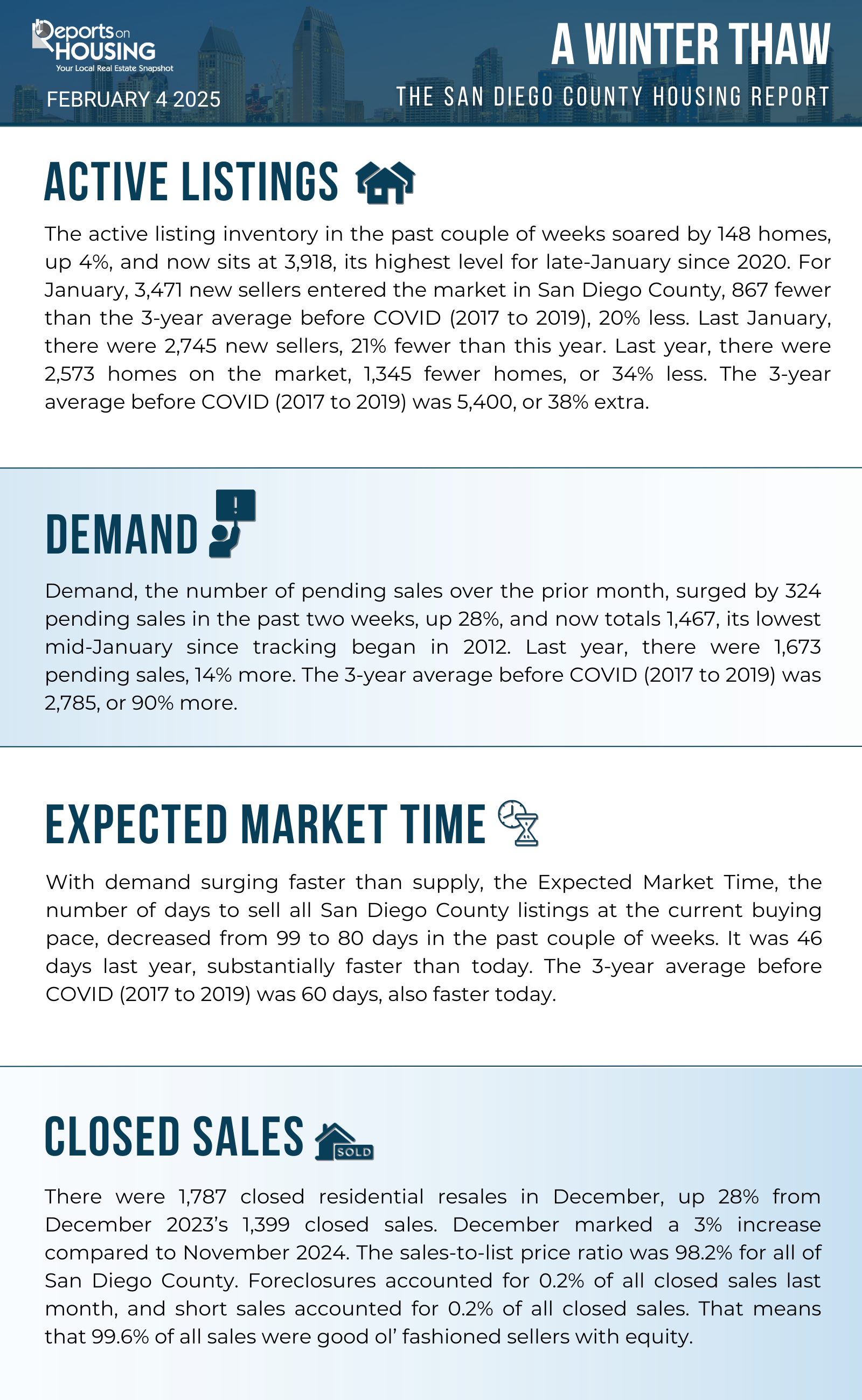
Buyers weighing the pros and cons of living in Carmel Valley almost always ask about commute times early in the conversation. Homes here have been averaging just 22 days on the market, and the median sale price sits at roughly $1,894,000 - so people want to know what daily life looks like before they commit.
That means understanding the highway layout, where public transit falls short, and what you can realistically do on foot. Whether you're heading downtown for work or just making a run to One Paseo, here's how transportation works in this area.
Driving Routes and Airport Access
Most travel in and out of the area relies on two major highways. Interstate 5 runs along the western edge as a direct north-south corridor, while State Route 56 cuts east-west through the community.
For air travel, San Diego International Airport (SAN) is the closest major commercial option. Most residents get there by ride-hailing app, taxi, or private shuttle - there's no single obvious transit path, so people generally pick whatever's most convenient for the trip.
Routes from Downtown San Diego
The drive from Downtown San Diego covers roughly 19 to 20 miles. In light traffic, you're looking at about 21 minutes via Interstate 5.
Rush hour changes that math. Depending on when you leave and how bad congestion gets, that same trip can stretch to 25 or 30 minutes. Worth checking a live traffic app before you head out during morning or evening peaks.
Airport Shuttles and Private Transfers
Several private companies offer shuttle service directly to Carmel Valley addresses from San Diego International Airport, ranging from shared vans to private black-car options. Booking ahead matters, especially around holidays.
Uber and Lyft are also popular for airport runs - drivers are available throughout the day, and for a lot of residents it's simply the easiest option.
Public Transit Options for Residents
The San Diego Metropolitan Transit System (MTS) and the North County Transit District (NCTD) handle regional public transportation, but local bus coverage within Carmel Valley's residential streets is genuinely limited. A proposed Purple Line trolley extension could eventually change that, but there's no San Diego Trolley station here right now. Residents who do use transit work around it by driving to nearby commuter rail stations or catching express bus routes on the neighborhood's edges.
Local Bus Routes and Fares
A few MTS routes skirt the community. Route 237 is a Rapid Express line connecting Mira Mesa's Miramar College Transit Station to the Torrey Pines Gilman Transit Center at UCSD, running along Mira Mesa Boulevard on the northern edge. Route 235 and Route 20 also pass near the area.
Starting October 1, 2026, a single MTS bus ride costs $3.00. Monthly passes are $85 for adults and $28 for seniors, Medicare recipients, and people with disabilities. Low-income riders enrolled in the PRONTO LIFE program pay $2.50 for a single fare or $72 for a monthly pass.
Commuter Rail and Park-and-Ride
The Sorrento Valley COASTER station at 11170 Sorrento Valley Road is the nearest rail link, running between Oceanside and the Santa Fe Depot in Downtown San Diego. From certain parts of Carmel Valley, it's about an 18-minute walk.
If you'd rather drive to it, there's a park-and-ride lot at 12791 Sorrento Valley Road on the south side of Carmel Valley Road just west of I-5. The lot shares a site with a Goodwill donation center and connects directly to the SR-56 Regional Bicycle Trail.
Daily Life Without a Vehicle
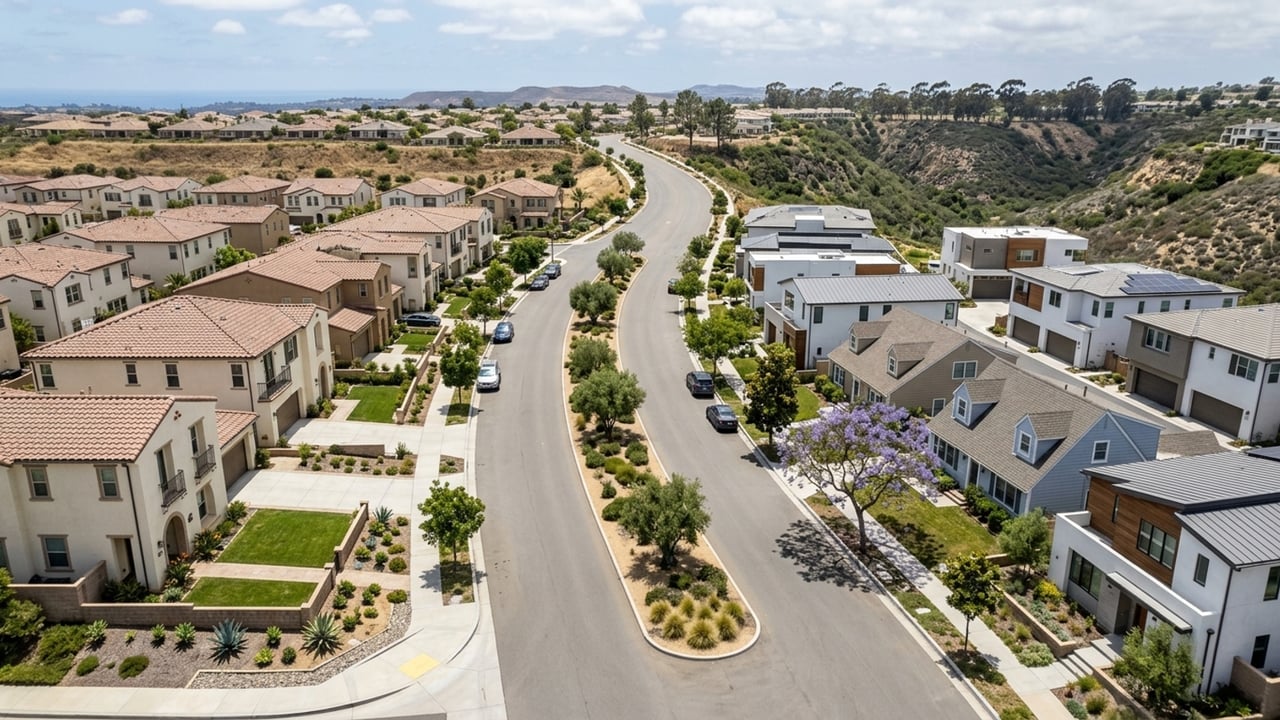
A car isn't optional here - it's the baseline. The residential streets spread across hills and canyons in a way that makes walking to a grocery store or school drop-off impractical for most residents.
That said, the community does have some concentrated commercial areas where you can park once and get a few things done on foot. It's not the same as walkable transit access, but it's worth knowing where those pockets are.
Walkability Around Local Centers
One Paseo and the Del Mar Highlands Town Center are the two spots that deliver a pedestrian-friendly experience - wide sidewalks, plazas, shops, and restaurants clustered together.
If your home is directly adjacent to one of those centers, walking to dinner or coffee is genuinely easy. If you're deeper in one of the single-family subdivisions, you'll drive to get there, as most residents do.
Accessible and Specialized Transportation
Seniors and anyone needing non-emergency medical transportation typically rely on specialized local services or ride-hailing apps. Because MTS buses don't run through the residential blocks, door-to-door service is usually the only practical option.
Many residents arrange taxis or private rides for medical appointments in La Jolla or downtown San Diego. If you have a family member who can't drive, plan on either driving them yourself or organizing private transport - the bus network won't cover it.
Frequently Asked Questions
How do you get to Carmel Valley, CA?
Most people arrive by car via Interstate 5, which borders the western edge, or State Route 56, which runs east-west. If you're flying, San Diego International Airport is the closest commercial airport - you'll need a taxi, rideshare, or shuttle to get to the neighborhood from there.
How far is Carmel Valley from Downtown San Diego?
Roughly 19 to 20 miles north. In light traffic, that's about 21 minutes via I-5. During rush hour, expect 25 to 30 minutes.
What is the best way to get from the San Diego airport to Carmel Valley?
A private airport shuttle, taxi, or ride-hailing app like Uber or Lyft. The drive uses I-5 North, and you avoid the hassle of transferring between transit systems with luggage.
Does Carmel Valley have public transportation?
Yes, but it's limited. The Sorrento Valley COASTER station provides regional rail access, and MTS routes like the 237 Rapid Express run along the northern edge. Deep within the residential neighborhoods, local bus coverage is sparse.
How much does the bus cost in Carmel Valley?
Currently, a standard single MTS ride is $3.00. Monthly passes are $85 for adults and $28 for seniors and riders with disabilities. Through the PRONTO LIFE program, eligible low-income riders pay $2.50 per single fare.
Do you need a car in Carmel Valley?
Yes. Local transit coverage is sparse and the residential areas are spread out - a vehicle is required for commuting and most daily errands.
Is Carmel Valley walkable?
Depends where you live. One Paseo and Del Mar Highlands Town Center are pedestrian-friendly once you're there, but getting to either of them from most single-family subdivisions means driving.