Carmel Valley is a distinct master-planned community located entirely within the larger city limits of San Diego, CA. Buyers considering the pros and cons of living in Carmel Valley are usually weighing its newer, structured suburban environment against the historic, varied neighborhoods found closer to San Diego's urban core.
The financial difference between the two options is stark. The broader San Diego County single-family median home price sat around $1.05 million earlier this year, but Carmel Valley properties command a noticeable premium - with the neighborhood's median sale price recently hitting roughly $1.89 million, you'll want to align your budget with the specific property styles and locations you're targeting before you go too far down the road.
Geography and Layout of the Areas
Carmel Valley sits at the intersection of Interstate 5 and State Route 56, known locally as the Ted Williams Freeway. Interstate 5 runs along the community's western edge, while SR 56 serves as the primary east-west connector linking I-5 to I-15 in Rancho Peñasquitos. That specific highway positioning gives residents direct routes to multiple parts of the city without threading through surface streets.
The area is adjacent to San Diego's North City employment cluster - an economic hub that includes over 9 million square feet of office space in University City/UTC, another 9 million square feet of biotech and tech space in Sorrento Mesa and Sorrento Valley, and over 2.6 million square feet in Torrey Pines. UC San Diego and Scripps Health anchor the UTC area, bringing tens of thousands of employees into the immediate vicinity of Carmel Valley.
How Carmel Valley Fits Within San Diego Limits
Because it was developed primarily from the mid-1970s onward, Carmel Valley features a deliberate, master-planned design. The community relies on designated residential tracts connected by major arterial roads, rather than the continuous street grids you'd find in older sections of San Diego.
That structure concentrates commercial activity into specific nodes rather than scattering it along main streets. If you want defined residential subdivisions separated from retail centers, this layout tends to appeal more than the mixed-use zoning typical of downtown San Diego.
Master-Planned Layouts vs. Historic Grids
San Diego's older, established neighborhoods reflect early 20th-century organic growth - tight street networks, smaller lot sizes, and commercial storefronts integrated directly into residential blocks.
Carmel Valley trades that historic urban density for larger lot sizes and wider streets. Upscale enclaves like Rancho Pacifica and Meadows Del Mar offer gated privacy and large setbacks that are genuinely difficult to find in San Diego's older city core.
Housing Markets and Property Styles
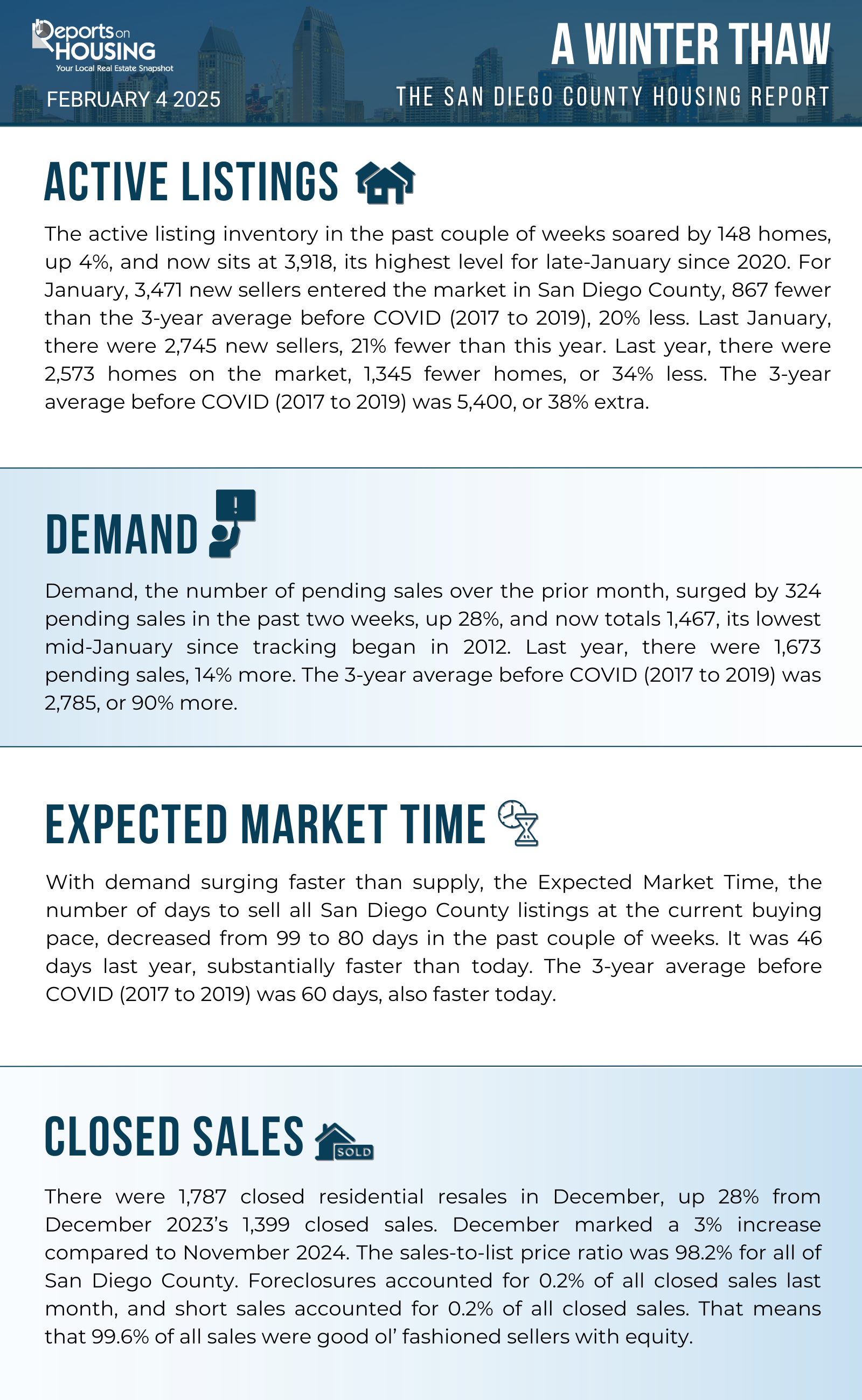
The Carmel Valley market moves quickly. Homes are spending roughly 22 days on the market before going under contract, inventory is tight at just 1.8 months of supply with 64 active listings, and the average sale-to-list ratio sits right around 100%. With 108 homes sold in a recent 30-day period, you don't have the luxury of taking your time when something you like comes up.
Architecture and Home Types
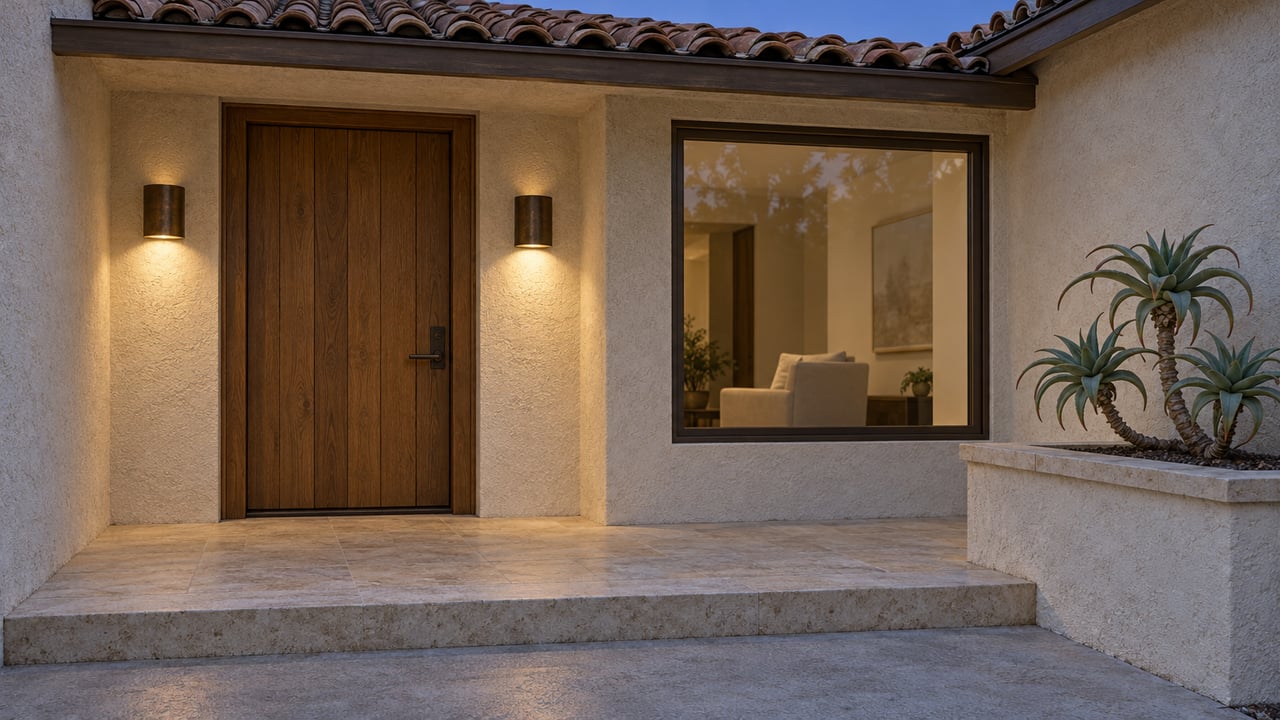
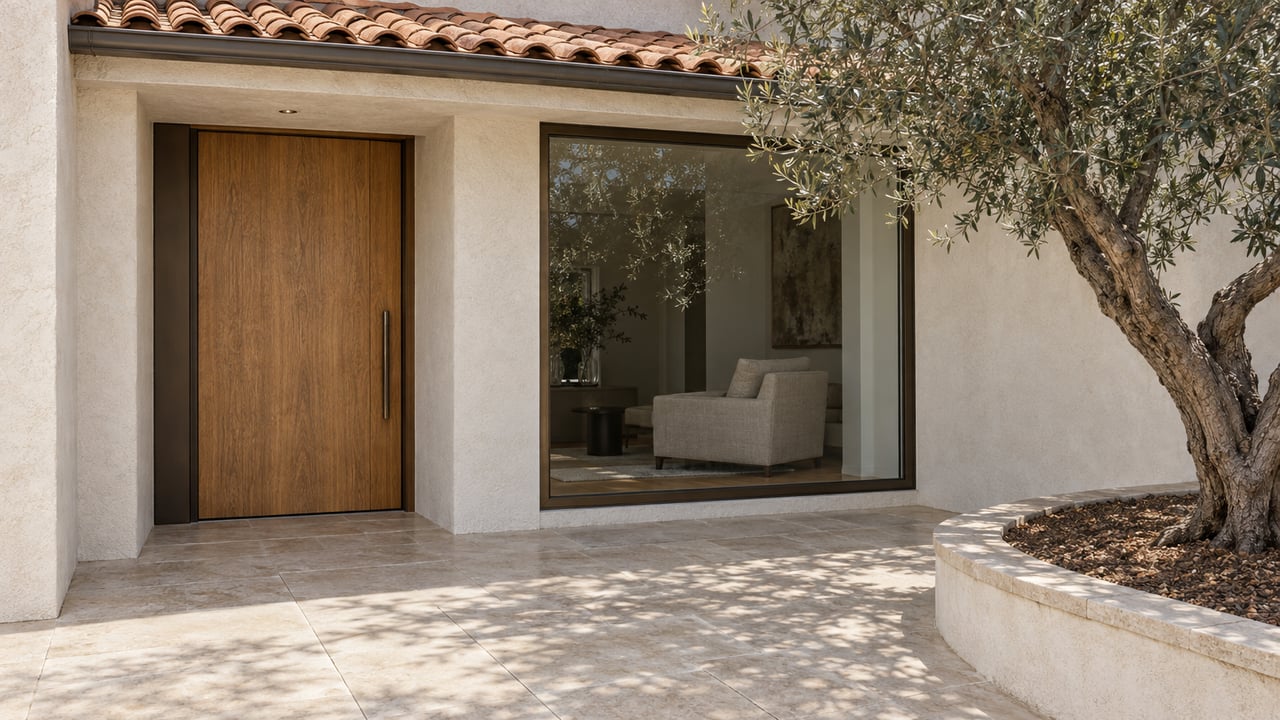
Carmel Valley is dominated by Spanish- and Mediterranean-style homes. Upscale estates in the area often feature Mediterranean Revival, Spanish Colonial, and Tuscan-inspired designs - red tile roofs, wrought-iron balconies, the whole package. Newer construction tracts within the community also mix in Modern Farmhouse and Coastal Contemporary designs.
Older San Diego neighborhoods offer a completely different set of options. Buyers looking closer to the city center will find Spanish Colonial Revival originals, Craftsman homes, and early 20th-century bungalows.
Market Pace and Competition
The $1.89 million median sale price in Carmel Valley reflects the demand for newer, larger homes near the coast. It stands well above the broader county median, though it's consistent with other affluent suburban areas in the region.
Buyers targeting central San Diego see much wider price variance depending on the neighborhood's age, condition, and proximity to downtown. A buyer willing to renovate a historic bungalow is operating in a different pricing environment than someone purchasing a turnkey Mediterranean estate in Carmel Valley - and it's worth knowing which one you are before you start touring.
Commutes, Highways, and Transit Logistics
Under normal traffic conditions, most Carmel Valley residents can drive to downtown San Diego in about 25 to 30 minutes. Interstate 5 provides the most direct north-south route, while Interstate 805 - which merges with I-5 near Sorrento Valley - offers an alternative path to other central neighborhoods.
The community's location on the western edge of State Route 56 also simplifies east-west travel. Commuters heading toward inland job centers in Rancho Bernardo or Mira Mesa use SR 56 to bypass local street traffic and reach Interstate 15.
Driving to Downtown San Diego
That 25-minute drive assumes standard commuting patterns. Rush hour congestion on Interstate 5 will extend it, and I'd encourage you to test the drive during your actual commuting hours - particularly near the I-5 and I-805 merge, which is where things tend to back up.
Parking is another practical difference. Carmel Valley homes almost universally include attached multi-car garages. Downtown San Diego residents often rely on street parking or paid garage spaces - a daily friction that adds up faster than most buyers anticipate.
Public Transit Alternatives
Carmel Valley is primarily car-dependent, but it does have specific public transit routes available. The MTS Route 101 connects the community to UTC, La Jolla, and downtown San Diego. For rush hour commuters, the MTS Route 921 operates as an express service aimed directly at downtown workers - a real alternative if you'd rather not sit on Interstate 5 every morning.
Parks, Retail, and Coastal Access
Carmel Valley sits immediately adjacent to Torrey Pines State Beach and the Del Mar coastline, with the community's western boundary running right along Interstate 5 and Torrey Pines. The ocean is a short drive from most neighborhoods here - not a weekend expedition.
The area also has extensive dedicated green space built into it. Torrey Hills Park, located at 4260 and 4262 Calle Mejillones, is a 15-acre facility with a playground, walking trails, ball fields, and a full-size basketball court. Other local options include Carmel Creek Park, Ashley Falls Park, Carmel Del Mar Park, and the Carmel Valley Community Park and Recreation Center, which houses indoor multipurpose courts and an amphitheater.
Shopping and Dining Differences
Carmel Valley centers its commercial activity around large, mixed-use developments. One Paseo is a 23.6-acre destination at Del Mar Heights Road and El Camino Real, with 96,000 square feet of retail and restaurants, 280,000 square feet of office space, and 608 luxury apartments. The Del Mar Highlands Town Center, just nearby, adds over 100 additional storefronts.
Downtown San Diego operates differently - denser, more pedestrian-driven. Neighborhoods like the Gaslamp Quarter offer continuous blocks of restaurants, bars, and entertainment venues that aren't built around parking lots.
Green Spaces and Recreation
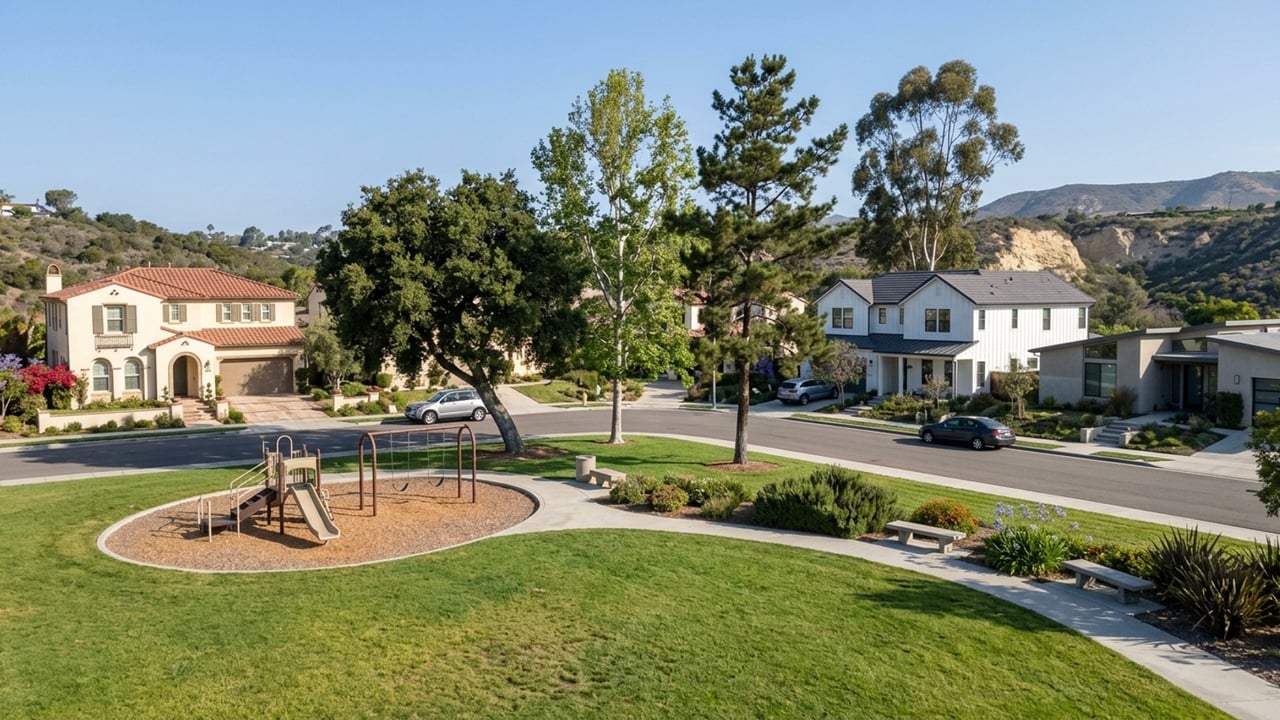
One of the advantages of a master-planned community is that parks and recreation centers were built directly into the neighborhood layouts from the start. Most Carmel Valley residential subdivisions have a dedicated park within walking distance or a short drive - it wasn't an afterthought.
Central San Diego relies on massive regional spaces like Balboa Park alongside smaller historic neighborhood squares. The recreational experience there feels woven into the urban fabric. Carmel Valley's parks function more as dedicated suburban gathering spaces - a different model, and a matter of what fits how you live.
Common Questions About the Area
Is Carmel Valley considered part of San Diego?
Yes. Carmel Valley is a distinct master-planned community located entirely within the city limits of San Diego, CA. It sits on the city's northern edge, bordered by Interstate 5 and State Route 56.
How do home prices compare between Carmel Valley and San Diego?
Carmel Valley is more expensive than the broader city average. The neighborhood's median sale price recently reached approximately $1.89 million, while the San Diego County single-family median was around $1.05 million earlier this year.
What is the commute like from Carmel Valley to downtown San Diego?
Under normal traffic conditions, driving to downtown San Diego takes about 25 to 30 minutes via Interstate 5. Commuters also have the option of taking the MTS Route 921 express service during rush hours.
Is Carmel Valley as walkable as urban San Diego neighborhoods?
No. Carmel Valley features a suburban layout centered around specific retail hubs like the 23.6-acre One Paseo, whereas downtown San Diego offers denser, continuous urban grids like the Gaslamp Quarter.
Why do buyers often choose to buy in Carmel Valley rather than other parts of San Diego, CA?
Buyers looking for suburban layouts often choose Carmel Valley for its newer Mediterranean-style estates, large recreational spaces like the 15-acre Torrey Hills Park, and immediate proximity to the Del Mar coastline.
Do houses sell faster in Carmel Valley compared to the overall San Diego real estate market?
Yes, Carmel Valley homes currently sell in roughly 22 days on the market. This fast pace is driven by low inventory, with the area recently seeing just 1.8 months of supply.