A buyer under contract on a Pacific Highlands Ranch home called her loan officer for what she thought was a routine update. Instead she got a number she hadn't budgeted for. A $3,600 annual special tax on the parcel translated to an extra $300 a month added to her debt-to-income ratio, tied to a line item she'd barely noticed on the property tax bill. The home hadn't changed. The math had, because nobody had walked her through what a Community Facilities District obligation actually does to a monthly payment until underwriting forced the conversation.
That line item is Mello-Roos, and in Carmel Valley it is the reason two homes with nearly identical list prices can carry very different real costs, depending on which pocket of the neighborhood they sit in.
Why This Tax Exists At All
Mello-Roos comes from the Mello-Roos Community Facilities Act of 1982, passed a few years after Proposition 13 capped how fast California cities and counties could grow their general property tax revenue. Developers building new master-planned communities still needed to pay for roads, sewer lines, parks, and schools, so the state gave local agencies a workaround: form a Community Facilities District, sell bonds to fund the infrastructure, then repay those bonds through a special tax billed directly to the homes inside the district.
That special tax is not calculated the way your base property tax is. Your base tax under Prop 13 is roughly 1 percent of assessed value, capped at 2 percent annual growth. A CFD's special tax follows its own Rate and Method of Apportionment, a formula set when the district was formed, usually tied to lot size, square footage, or property type rather than what the home is worth. That distinction matters more than it sounds. A CFD tax does not shrink as a percentage of value when your home appreciates. It stays close to fixed, or climbs on its own schedule, regardless of what the market is doing around it.
You'll find the exact CFD attached to a specific parcel through the San Diego County Assessor's Mello-Roos lookup tool, which lets you search by Assessor's Parcel Number and pull the special assessment detail for that fiscal year. This is worth doing before you fall in love with a floor plan, not after.
Four Pockets, Four Different Bills
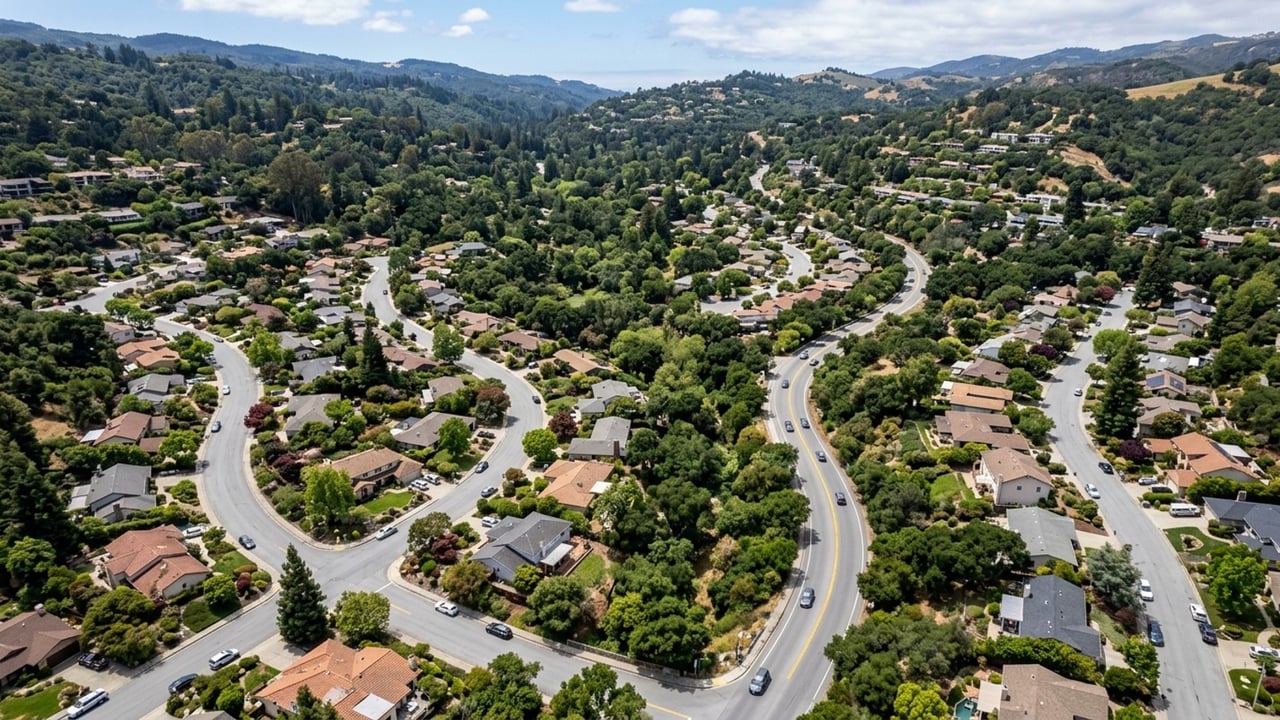
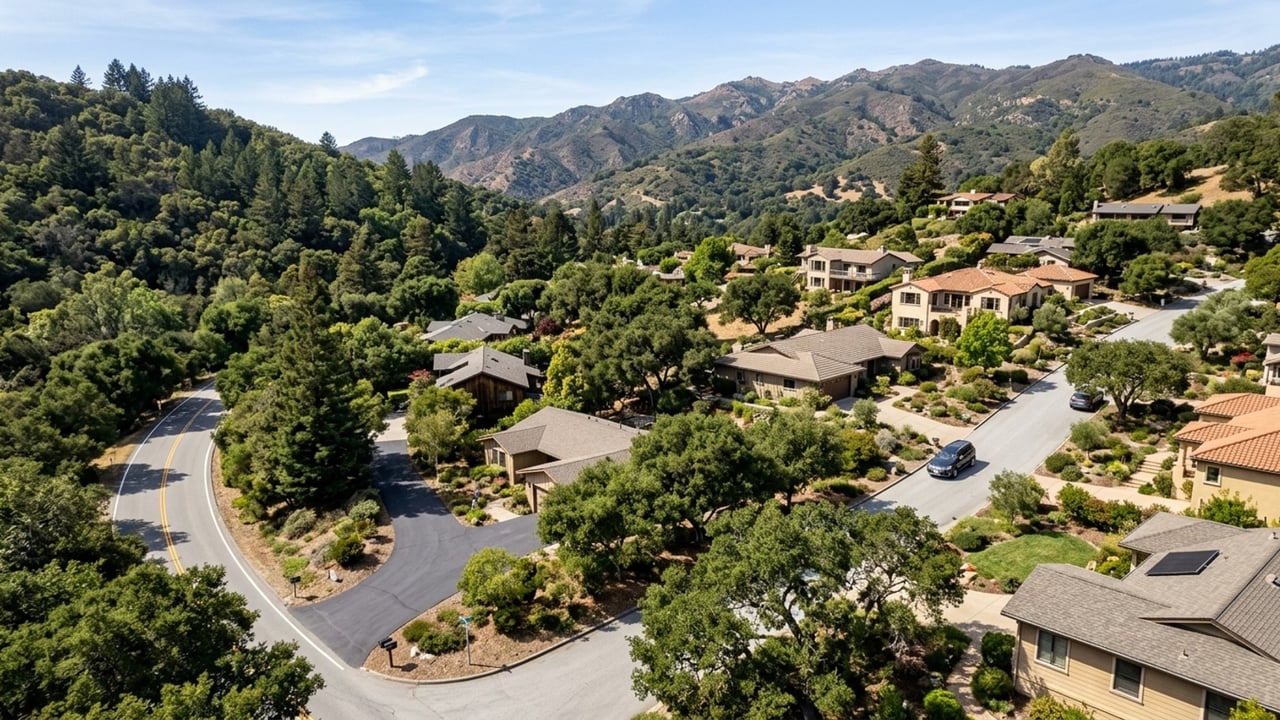
Carmel Valley isn't one market with one tax profile. It's several distinct build eras stitched together under one name, and the CFD question tracks almost exactly with when each pocket went up.
| Typical Build Era | CFD Obligation | Typical HOA | |
|---|---|---|---|
| Original Carmel Valley Village | 1986 to 1995 | Typically none | Varies, often modest |
| Torrey Hills | Varies by sub-community | Low to none, varies by sub-community | Varies |
| Pacific Highlands Ranch | Newer construction, ongoing | Roughly $2,000 to $5,000+ per year | Roughly $150 to $350 per month |
| Meadows Del Mar and Torrey Ridge | Varies by sub-community | Varies by sub-community | Varies |
The original Village streets predate the CFD era almost entirely, so a buyer there typically pays nothing beyond base property tax. Pacific Highlands Ranch sits at the other end of that spectrum, where new construction and the community amenities that came with it, from clubhouses to pools, were financed through bonds that homeowners are still paying down.
Run the math over a normal hold period and the gap stops looking like a rounding error. A Pacific Highlands Ranch buyer carrying $3,500 a year in CFD tax plus $250 a month in HOA dues is paying somewhere between $5,000 and $8,000 a year more in fixed carrying cost than a comparable Village buyer with neither obligation. Over a 10-year hold, that difference compounds to $20,000 to $50,000 or more, money that never shows up in the sale price comparison two homes get on a listing sheet.
What The Median Price Actually Flattens
As of March 2026, the median sale price across Carmel Valley sat at roughly $1.7 million, with homes selling in about 22 days and a price per square foot near $868, up modestly year over year. That single number is doing a lot of work to describe a market that includes $719,000 condos and $2.3 million detached homes under the same roof of data. The spread between those two products is more than three times, and neither figure tells you whether the home you're looking at carries a CFD obligation on top.
It's worth knowing that a different, commonly cited figure, the Zillow Home Value Index, put the average Carmel Valley home value closer to $1.97 million as of April 2026, down slightly year over year. That's not a contradiction so much as a reminder that home value indexes and median sale prices measure different things. One tracks estimated value across the entire housing stock. The other reflects whatever mix of homes actually changed hands that month. Neither one adjusts for what a buyer will actually pay every month once CFD and HOA obligations are added to the mortgage.
That's the real lesson underneath all of it. The number that determines what a Carmel Valley home costs you isn't the headline price. It's the headline price plus whichever pocket-specific tax structure is attached to that particular parcel, and the only way to know that number is to go looking for it directly.
Where This Actually Surfaces During A Transaction
MLS listings sometimes flag "Mello-Roos: Yes," but that flag is a starting point, not a figure you can budget against. Before writing an offer on anything built after the mid-1990s in Carmel Valley, there's a short list of documents worth requesting:
- The current property tax bill, which shows the CFD as its own line item under special assessments
- The Preliminary Title Report, which should reference any CFD lien attached to the parcel
- The CFD's Engineer's Report or Notice of Special Tax, which spells out the Rate and Method of Apportionment and any annual escalator
- The bond maturity schedule, since CFD obligations end once the underlying bonds are repaid, typically 20 to 40 years from formation, not indefinitely
Lenders take this seriously because they have to. Mello-Roos is counted in your debt-to-income ratio the same way your mortgage payment and HOA dues are, and many lenders escrow it monthly alongside your regular property tax. If the amount is underestimated during underwriting, it can affect loan approval or the cash you need to bring to closing, which is exactly what happened to the buyer at the start of this piece. The fix isn't complicated. It just has to happen before the offer, not during the loan.
The Real Comparison Isn't Sale Price
If you're comparing a Village resale against new construction in Pacific Highlands Ranch, the honest version of that decision isn't which one costs less to buy. It's which one costs less to hold. A Village home might ask a premium for its walkability to Del Mar Highlands Town Center and its mature tree canopy, while carrying none of the CFD math. A Pacific Highlands Ranch home might list for less per square foot while quietly adding thousands a year in fixed obligations that don't disappear even if your home's value dips. Neither answer is universally better. But you can't make that call from the listing price alone, and nobody selling you the home is obligated to walk you through the difference unprompted.
A Few Questions Worth Settling Early
Does Del Mar itself carry Mello-Roos the way Carmel Valley does? Del Mar's housing stock is largely older and built out, so CFDs are far less common there than in newer North County developments. Confirm on a parcel-by-parcel basis regardless of city, since exceptions exist.
Can a CFD obligation be paid off early? Some CFDs allow owners to prepay the bond-related portion. Many do not. The Engineer's Report and bond documents for that specific district will state whether prepayment is an option and what the procedure looks like.
Does the tax ever go away? Yes, eventually. Once the bonds that funded the district's infrastructure are repaid, the special tax retires. That can take decades, so treat it as a long-term carrying cost rather than a temporary one when you're running your numbers.
None of this is tax or financial advice, and every figure here should be confirmed against the actual documents for the specific parcel you're considering. But knowing which questions to ask, and which pocket of Carmel Valley you're standing in when you ask them, is the difference between a number that surprises you at underwriting and one you priced in from the start.
If you're comparing Carmel Valley pockets and want the real carrying-cost math run before you write an offer, Amy Green can pull the parcel-specific numbers with you. Let's Connect.