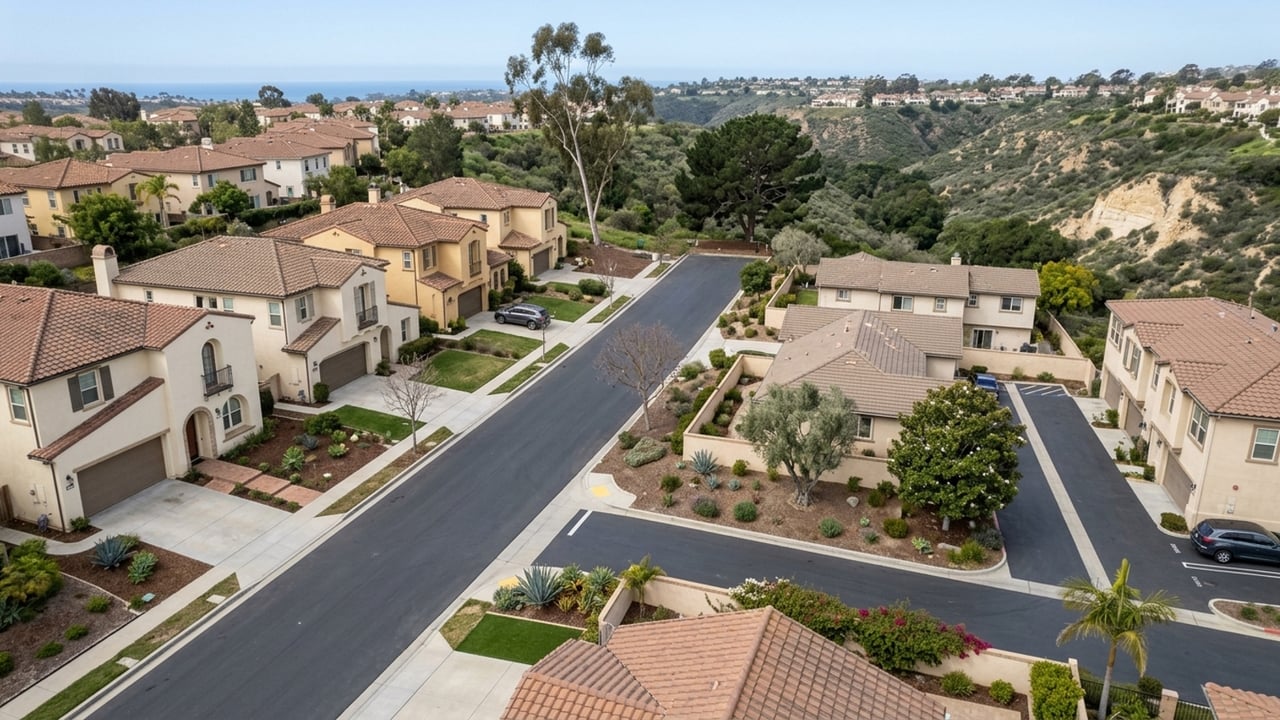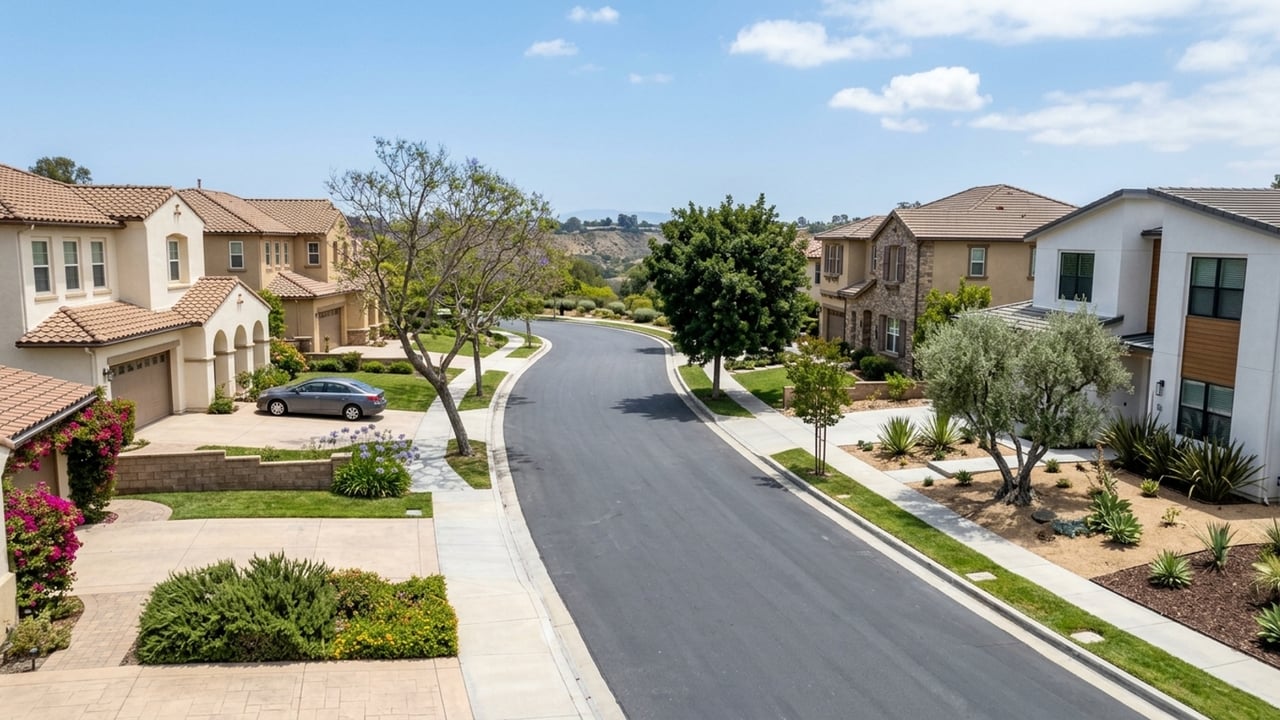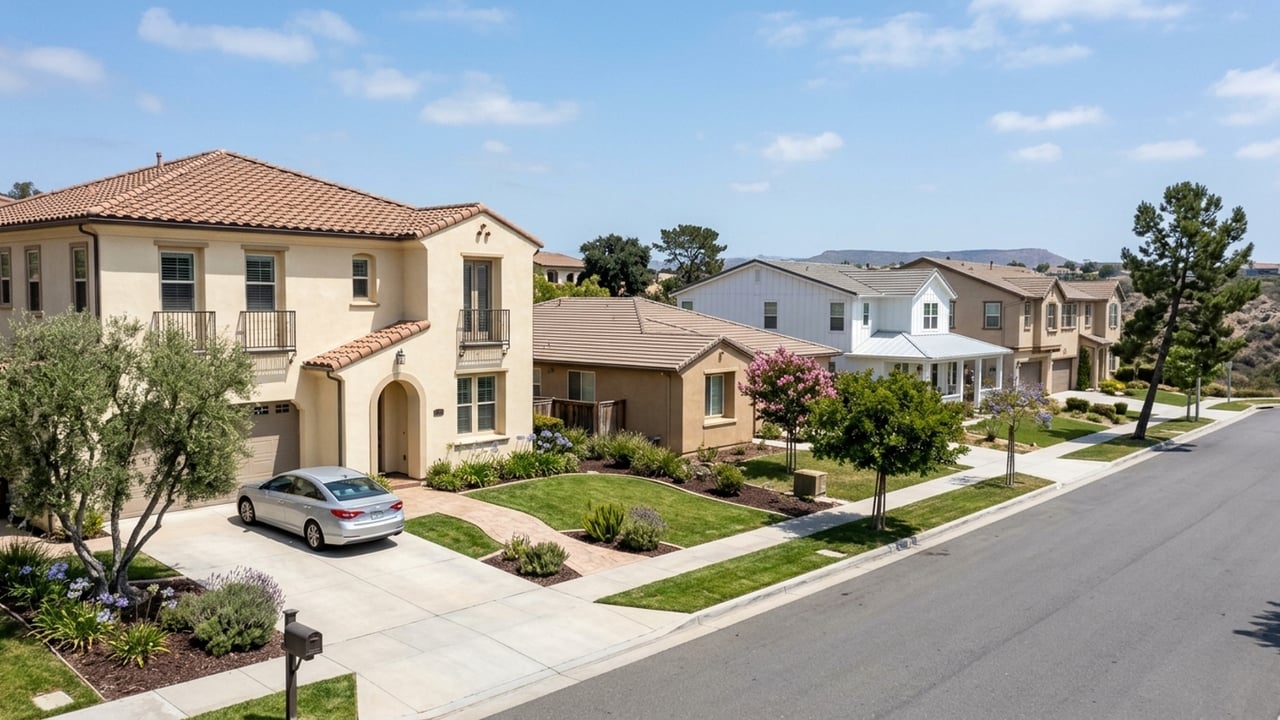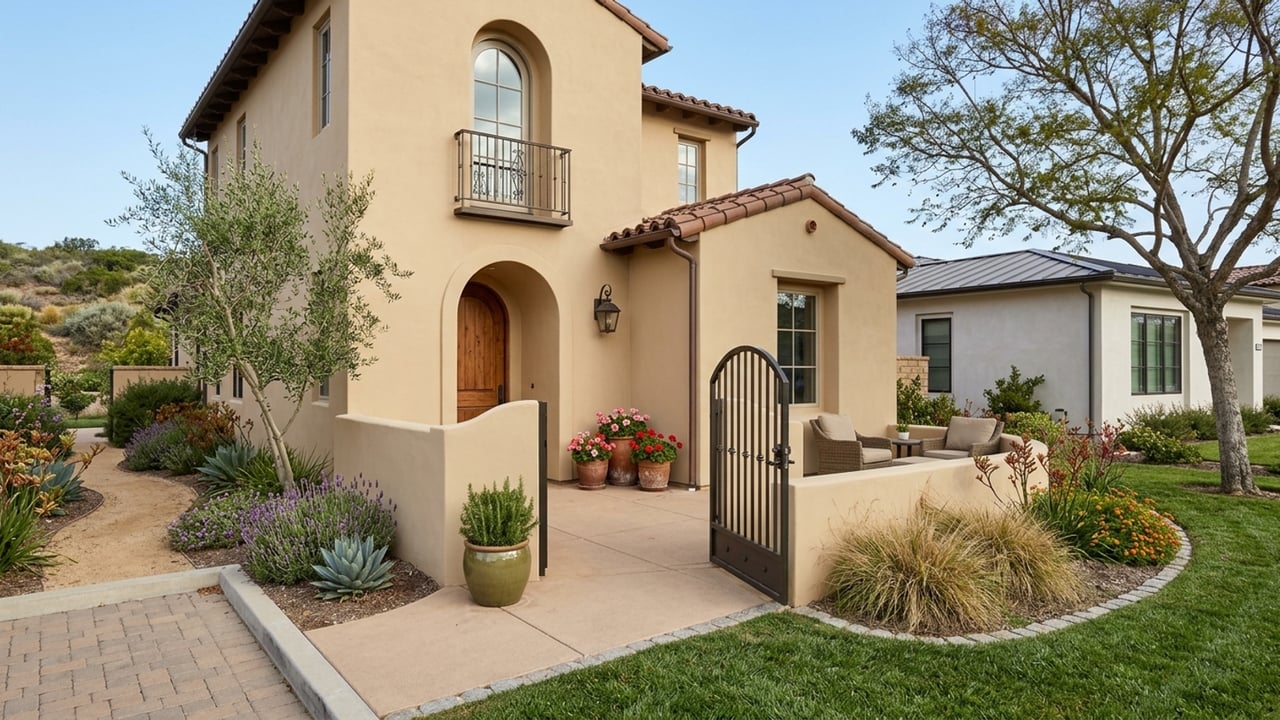
Staging does a different job in Carmel Valley depending on what you're selling.
Key Takeaway
If you're selling a single-family home in Carmel Valley, professional staging of the main rooms before listing photos is usually worth the money because the goal is generating multiple offers. Condo and townhouse sellers face more competing listings and should stick to targeted work on the living area and kitchen. If you'd rather skip preparation entirely, compare a cash offer instead.
Who This Guide Is For
You're getting a Carmel Valley, San Diego home ready to list and deciding whether to pay for professional staging, do it yourself, or use virtual staging, and where the money should go.
How Home Staging Pays Off by Property Type in Carmel Valley
Carmel Valley houses and condos need different staging because they sell at different speeds. Houses are staged to draw multiple offers fast, and attached homes are staged to win against similar listings. General steps for selling a home in Carmel Valley are available for those preparing to list.
Three questions set your approach:
- Your property type, profiled below.
- Whether you'll still live there when it lists. An occupied home points to partial staging, and an empty one to full or virtual staging.
- Whether your furniture is neutral, in good repair and sized to the rooms. If it is, doing it yourself may work. If not, professional staging is standard.
Single-Family Homes
With so few houses on the market, buyers decide in the first days. Have staging and photos finished before the listing goes live so the first weekend draws competing offers. Spend on the rooms in the lead listing photos.
Houses sold in a median 26 days across 47 sales in the 90 days ending October 31, 2026, and 30.3% sold above list price. At 1.1 months of supply, every house on the market would sell out in about five weeks if no new listings came on.
One honest caveat: many houses would sell unstaged in this market, so full-house staging can be money spent on speed you'd get anyway. The case for it rests on maximizing price, not on getting the property sold.
Condos
Recently there were more condos for sale (25) than houses (17), even though houses outsold condos by more than two to one. A condo competes with near-identical floor plans in the same complex, so staging is how your unit looks like the better version of that layout. Put the money into the living area, kitchen and listing photos rather than every room.
Only 5.8% of condos sold above list, so a bidding war is unlikely. Staging's job here is to avoid price cuts and long market time. That figure rests on a small sample of 18 sales and can swing quarter to quarter.
Townhouses
Townhouses are the split case. They're the slowest-selling type at a median 53 days on market, yet roughly 19.8% closed above asking, based on 16 sales. That pattern is consistent with buyers rewarding units that show well in person, which makes physical staging of the main rooms a better choice than virtual staging alone.
With only 16 sales, though, the split may be noise. The data can't show whether staging or pricing explains which units sold over list.
What the All-Homes Price Jump Means for Sellers
The overall median sale price for Carmel Valley jumped 50.9% year over year, to roughly $2,093,998. That rise came mostly from pricier house sales making up a bigger share of the mix, not from every home gaining value. Condo and townhouse medians dipped slightly over the same period.
Set your list price and staging budget from the Carmel Valley housing market data for your own property type, not the headline figure. For a condo or townhouse owner, budgeting staging against that inflated figure is a common way to overspend.
Home Staging Costs in Carmel Valley
What you pay depends on whether the home is empty or occupied and how much of the work you handle yourself. Before signing, ask each stager for the contract's minimum term, the monthly extension rate, delivery and pickup fees, and a certificate of insurance.
Staging Consultation
A staging consultation is a one-time walkthrough where a stager tells you what to remove, rearrange and rent. It's the low-cost starting point for occupied condos and townhouses.
Reported fees vary widely by provider:
- One San Diego staging studio lists a standalone two-hour consultation at $200.
- A 2026 San Diego staging cost guide lists consultations in the $300 to $500 range.
- Another San Diego-focused source cites a minimum of $775 for a one-day consultation.
These are vendor-reported figures, so no single typical fee exists.
The limitation is that you do all the work after the visit. A consultation also doesn't fix furniture that's the wrong scale for the room.
Partial Staging for an Occupied Home
With partial staging, the stager works with your furniture and adds rented pieces, art and accessories in the main rooms. A San Diego home staging studio advertises occupied staging and photo prep starting at $600. That covers a consultation, a checklist, and light staging of the living room, dining room, kitchen and primary bedroom, with extra rooms at $100 to $400 each.
A separate 2026 San Diego staging guide notes that occupied staging is custom-priced. It typically costs more than vacant staging of the same property because the stager has to work around existing furniture.
What you give up is convenience: you live around rented pieces until the home sells.
Full Staging for a Vacant Home
Full staging provides furniture for every main room. It is usually billed as an upfront fee for an initial term plus a monthly rental after that.
A 2026 San Diego staging-cost guide reports vacant packages starting at $2,800, including 60 days of furniture rental for a full home. Monthly extensions beyond that period cost roughly 20% of the original fee. Broader vacant full-home staging in San Diego can range from about $4,500 to $8,000 or more depending on size.
Rental fees keep running until closing.
Virtual Staging
Virtual staging adds furniture digitally to listing photos of empty rooms. A San Diego virtual staging provider charges:
- $29 per photo for adding furniture and decor.
- $39 per photo for removing items plus adding furniture and decor, or for changing landscaping.
It suits a vacant condo where the main goal is standing out online.
The limitation is that buyers walk into empty rooms at the showing. California also requires altered listing photos to be disclosed.
Staging Costs Versus the List-Price Gap
- Condo: On a hypothetical $750,000 asking price, the 97.8% condo sale-to-list ratio implies a sale at about $733,500, roughly $16,500 under asking.
- House: On a hypothetical $2,600,000 asking price, the 99% single-family ratio implies a sale at about $2,574,000, roughly $26,000 under asking.
Set the staging quotes above against those gaps to see how large the spend is relative to the room buyers have typically negotiated.
These are medians across staged and unstaged homes, so they can't show how much of the gap staging closes. Treat the example as a budgeting yardstick, not a return estimate.
Professional Staging Versus Do-It-Yourself Staging
Do-it-yourself staging costs nothing but your time, but it requires neutral, well-kept furniture. An occupied condo or townhouse with properly scaled furniture can often manage without a stager. Professional help makes more sense for:
- A vacant home.
- A detached house aiming for a bidding war.
- A home with dated or wrongly scaled furniture.
When to Hire a Professional Stager
Per the National Association of Realtors 2025 Profile of Home Staging, 83% of buyers' agents said staging made it easier for a buyer to visualize the property as a future home. On offer value:
- 29% of real estate agents reported that staging led to a 1% to 10% increase in the dollar value offered.
- Among buyers' agents, 17% said it raised the offered value by 1% to 5% compared with similar unstaged homes.
What you give up is money and time. Professional staging is the most expensive option and needs lead time to book, which can push back your listing date.
When Do-It-Yourself Staging Is Enough
Remove a third of the pieces, clear surfaces, and add fresh linens and light. A consultation can guide the work.
The limitation is that it's hard to judge your own home with fresh eyes. Listing photos will show every room that didn't get the treatment.
Which Rooms to Stage First
Buyers judge Carmel Valley homes on the first five listing photos. A staged living room and kitchen will do more for your sale than a decorated guest bathroom, so stage the rooms buyers compare side by side, not every room.
Living Room and Kitchen
These are usually the lead listing photos. Focus on scale-appropriate seating, clear counters and good lighting.
In condos, this is where similar units differ most. Staging can't hide dated finishes, though. If cabinets or counters are worn, put the money toward small repairs before renting furniture.
Primary Bedroom
Use a properly sized bed, matching nightstands and neutral bedding so the room reads as restful and shows its true size. Oversized furniture makes the room look smaller in photos, and sometimes removing pieces does more than adding them.
Bathrooms
Keep counters clear, put out fresh towels, and use new caulk and bright bulbs. This is low-cost work any seller can handle. No accessory covers stained grout or an old vanity.
Patio, Balcony and Entry
Outdoor space is part of the sale in a San Diego climate. Stage a seating area on the patio or balcony, and keep the entry clean, lit and planted. In a condo or townhouse complex, ask the HOA whether balcony and front-entry rules limit outdoor staging before you buy pots or furniture.
Spare Bedrooms and Home Offices
Give each room one clear use, office or guest room, so buyers can price the space. At an $878 median price per square foot for single-family homes, a room buyers can't picture using is expensive square footage to leave unexplained.
This is also the room most often left as storage. Clearing it may mean renting off-site storage, which adds a monthly cost.
How to Get Your Carmel Valley Home Staged Before Listing
Repairs, decluttering and furniture delivery all have to be finished before the photographer arrives. Ask your listing agent, in writing, whether the listing agreement includes a staging consultation or a staging credit, so you know your budget before you start.
Step 1: Review Competing Listings of Your Home Type
Pull the active 92130 listings of your property type and size, and study their photos. This shows what your home will be compared against and how much staging it needs to stand out. Active listings change weekly, so a comparison done a month before listing may be out of date by launch day.
Step 2: Declutter, Repair and Deep Clean
Pack personal items, fix small defects and deep clean before any stager arrives. Staging works on a clean, repaired home, not instead of one. Repairs often uncover more repairs, so build slack into the timeline.
Step 3: Book the Stager
Compare quotes on the same scope, using the contract questions under costs, and confirm the install date lands before photos. In a condo or townhouse complex, check that delivery fits the HOA's move-in rules, which can limit install days, before you book.
Step 4: Photograph After Staging Is Finished
Schedule professional photos only once staging is fully installed, because the photos are what buyers compare before deciding to visit. Shooting early means relaunching with new photos later, after the first-week attention has passed.
Step 5: Keep the Home Show-Ready
Occupied homes need a daily reset before showings. Vacant homes need regular checks for dust, lights and temperature.
Living in a staged home for weeks is tiring, and the longer the home is on the market, the harder it is to keep it looking like the photos. If you need a stager, I can share professionals who have worked in the area.
At a Glance
- Single-family homes, 90 days ending 2026-10-31 (47 sales): median sale price $2,607,621 (+15.1% year over year); median 26 days on market; 99% sale-to-list; 30.3% sold above list; 1.1 months of supply; 17 for sale; $878 median price per sq ft
- Condos, 90 days ending 2026-10-31 (based on 18 sales, a small sample): median sale price $749,888 (-2.6% year over year); median 44 days on market; 97.8% sale-to-list; 5.8% sold above list; 4.4 months of supply; 25 for sale; $794 median price per sq ft
- Townhouses, 90 days ending 2026-10-31 (based on 16 sales, a small sample): median sale price $1,249,963 (-1.2% year over year); median 53 days on market; 98.5% sale-to-list; 19.8% sold above list; 2.9 months of supply; 15 for sale; $828 median price per sq ft
- All homes, 90 days ending 2026-10-31 (81 sales): median sale price $2,093,998 (+50.9% year over year, driven by a heavier mix of house sales); median 42 days on market; 98.7% sale-to-list; 22.7% sold above list; 2.2 months of supply; 59 for sale; $835 median price per sq ft
Carmel Valley Home Staging FAQs
How Do I Find a Home Stager Serving Carmel Valley, San Diego?
Ask for photos of homes they've staged in the 92130 ZIP code that match your property type, and for their experience with HOA delivery rules. A local listing agent can also share stagers who have worked in the area.
Who Pays for Home Staging When You Sell?
The seller usually pays, though some listing agreements include a consultation or staging credit. Get what's included in writing before you sign.
Are Home Staging Costs Tax Deductible When Selling a Home?
Under IRS Publication 523 (2025), staging costs incurred to sell the home fall under "any other fees or costs to sell your home." These are selling expenses that reduce your amount realized, which is the selling price minus selling expenses. Confirm your situation with a tax professional.
Do I Have to Disclose Virtual Staging in California Listing Photos?
Yes. California AB 723, effective January 1, 2026, requires a broker or salesperson who uses a digitally altered image in an ad to include a statement that it's altered and a link, URL or QR code to the unaltered image. CRMLS Rule 11.5.2 also requires virtually staged photos to be labeled in the photo description. It bars altering real elements like flooring or walls unless they will be improved by closing.
How Long Is a Typical Home Staging Contract?
It varies by company and property tier. Most vacant packages include the 60-day term noted above, and luxury homes often use 90 days. With condos taking a median 44 days on market, a 30-day minimum term may not cover a typical sale.
Can I Move Staging Furniture Into a Carmel Valley Condo Without HOA Approval?
No, you usually need to coordinate with the HOA. Ask about move-in reservations, elevator or loading-area bookings, damage deposits, allowed hours, and whether the stager's insurance certificate must name the HOA. Delivery and pickup both count as moves.
Sources
- Redfin: Data Center
- National Association of Realtors: NAR Report Reveals Home Staging Boosts Sale Prices and Reduces Time on Market
- San Diego House Stage: Pricing
- Signature Staging: How Much Does Home Staging Cost in San Diego?
- Stuccco: Virtual Staging San Diego
- California Legislative Information: AB 723
- Relto: CRMLS Digitally Altered Image Rules
- IRS: Publication 523
- Signature Staging: Home Staging Carmel Valley