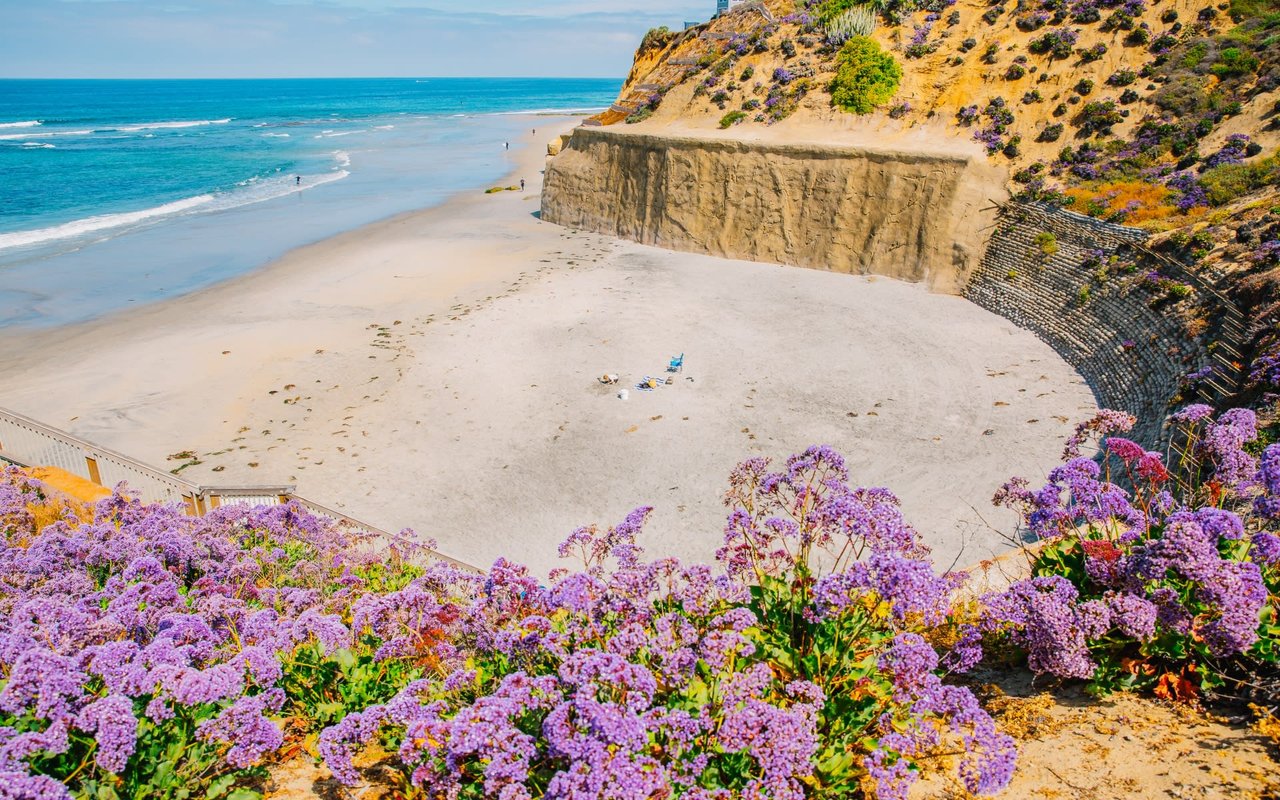
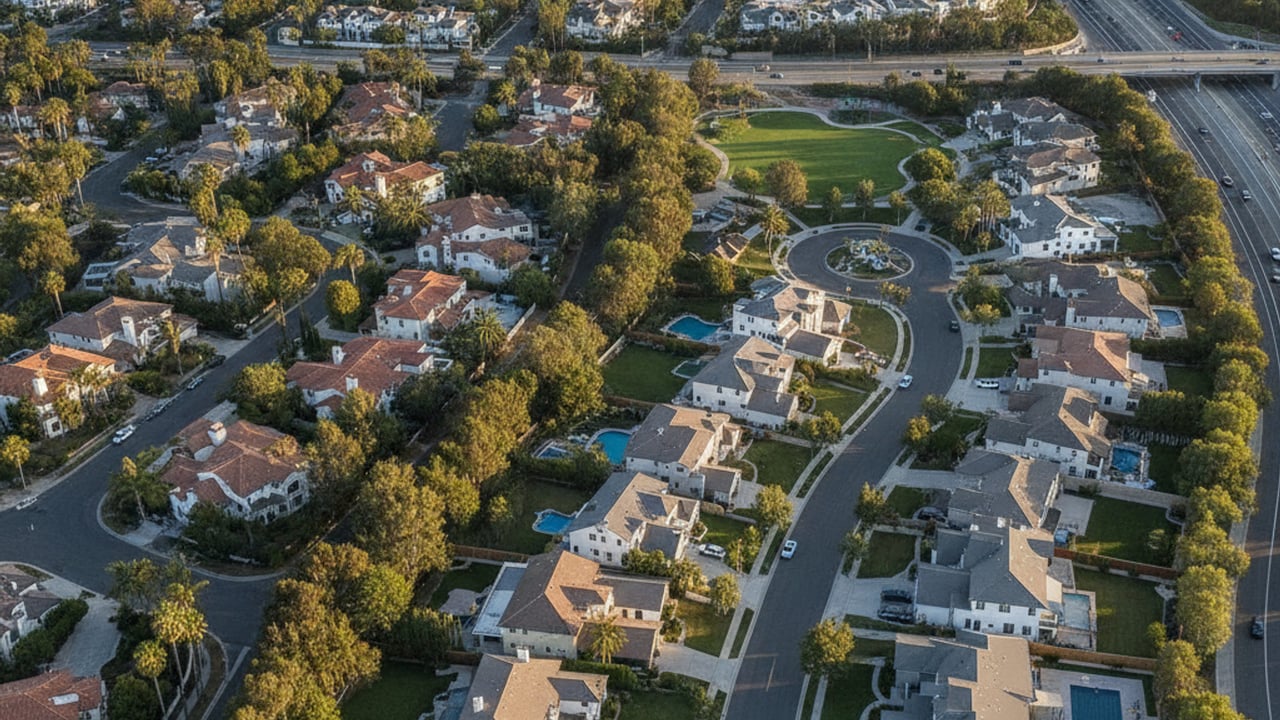
Carlsbad, CA runs along the San Diego County coast and draws buyers who want beach access alongside actual neighborhoods - not just a vacation zip code. The population holds at around 114,500 residents spread across five ZIP codes: 92008, 92009, 92010, 92011, and 92018.
Prices here cleared the million-dollar mark a while ago and haven't looked back. Before you start touring homes, you'll want a firm grip on what the market is doing, what different parts of the city actually offer, and how California's closing process works. That's what this guide covers.
As of mid-2026, the median sale price sits at approximately $1,420,000. Homes are going under contract in about 27 days, and with roughly 252 active listings and just 2.4 months of supply, the market tilts slightly toward sellers.
That said, buyers aren't completely without leverage. Homes are averaging 98.4% of list price - not full ask, and not a bidding war on every property. About 28% of sales do close above the asking amount, so sharp pricing matters. Know these numbers before you walk into your first showing.
That question always comes down to your own financial position and timeline. The 252-home inventory gives you real options, but 27 days on market means you can't sit on a decision for a week. If something fits, you move.
Buyers holding out for a significant price correction may be waiting a long time. Demand here has been consistent, and the numbers reflect that. If you need to sell your home in Carlsbad before buying, coordinate your timelines carefully.
Carlsbad's inventory covers a wide range - coastal estates with ocean views, golf-course-adjacent properties, older attached housing, and everything in between. At the $1.42 million median, you're generally looking at well-maintained homes with modern updates. Push below that, and you're mostly in attached product or smaller older properties further from the water.
Single-family homes dominate the market, running from mid-century builds to contemporary designs. True new construction is harder to find in the fully developed coastal sections - you're more likely to encounter it on the eastern edges of the city, where newer inland phases are still being built out. Those properties tend to come with modern energy efficiencies, but plan for higher property tax assessments than you'd see on a resale.
Condominiums and townhomes are your primary entry point into Carlsbad real estate. They generally price below the overall median, but don't forget to factor HOA fees into your monthly budget - they're real costs that affect what you can actually afford.
The upside: less exterior maintenance, and a more accessible path in.
Carlsbad breaks into several distinct areas: Carlsbad Village, La Costa, Aviara, Bressi Ranch, Calavera Hills, Rancho Carrillo, North Beach/South Beach, and Olde Carlsbad. Each has a different character, different price point, and different trade-offs worth understanding before you start narrowing your search.
The broad divide is coastal versus inland. Coastal gets you walkability and beach access. Inland gets you space and newer infrastructure.
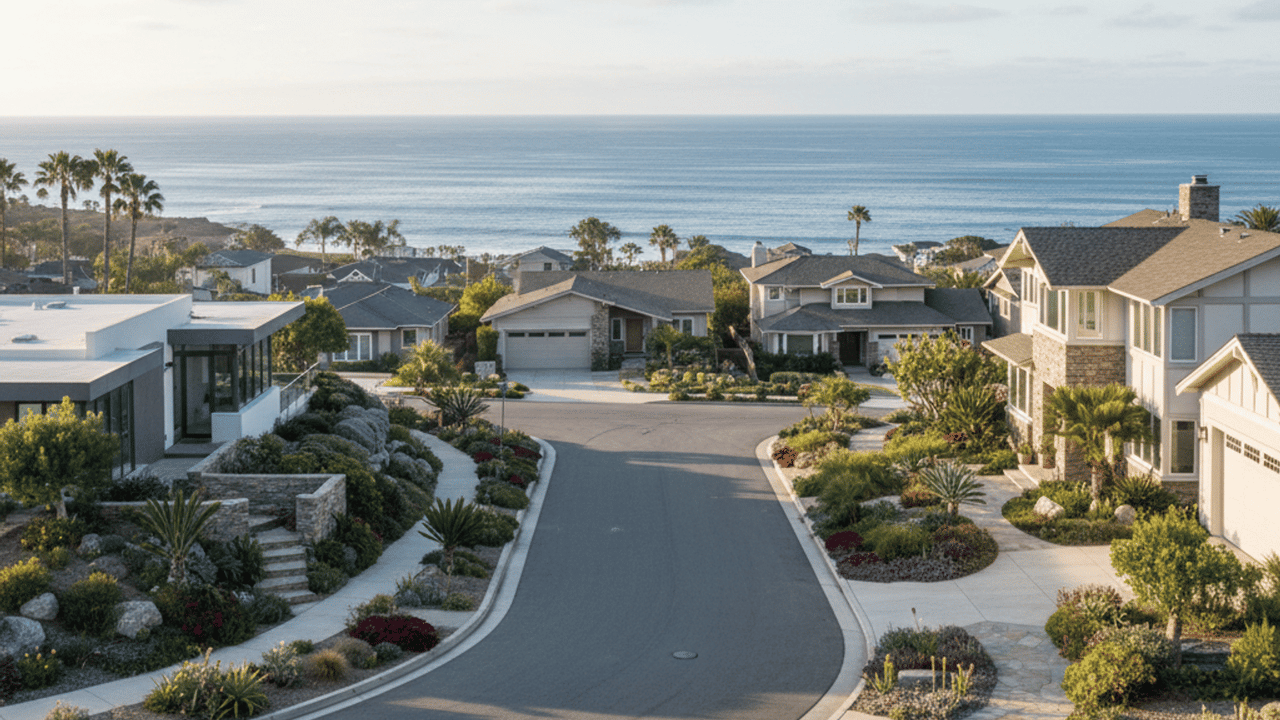
Carlsbad Village is the downtown core - restaurants, retail, and the historic Carlsbad Santa Fe Depot. North Beach and South Beach sit at the expensive end of the city's spectrum, and for good reason: immediate ocean access, walkable everything. What you trade away is yard space and parking. Lots near the water are constrained, and that's just the reality of coastal California. This trade-off highlights some of the basic pros and cons of living in Carlsbad.
Head east and the character shifts. Bressi Ranch and Rancho Carrillo offer planned streetscapes and community amenities. La Costa - which includes La Costa Valley, La Costa Oaks, and La Costa Greens - wraps around the local resort and golf infrastructure with a varied mix of housing styles.
If square footage and larger lots are the priority, this is where you'll focus your search.
Carlsbad sits in San Diego County, roughly 35 miles north of downtown San Diego, with Oceanside to the north and Encinitas to the south. It's a long coastal footprint with significant inland reach.
Notable landmarks in the area include LEGOLAND California, The Flower Fields at Carlsbad Ranch, and Leo Carrillo Ranch Historic Park, which provides public trails and some genuine historical depth to the region.
McClellan-Palomar Airport is located directly in Carlsbad, near the Bressi Ranch neighborhood - convenient for smaller flights and corporate travel. For major commercial flights, San Diego International Airport is your primary hub. Los Angeles International Airport (LAX) is also accessible, roughly an hour north depending on traffic.
A $1.42 million median price means a substantial down payment and a real monthly commitment. Budget beyond the mortgage: property taxes, insurance, and maintenance add up. That's true anywhere, but at this price level the numbers aren't small.
The cost of living in Carlsbad largely tracks with broader San Diego County averages. What you get in return is well-maintained public spaces, extensive trail networks, and the Pacific Ocean essentially at your doorstep.
The weather is genuinely good. Carlsbad runs mild year-round - dry summers, moderate winters. The one caveat is the marine layer that rolls in late spring and early summer, which locals call "May Gray" and "June Gloom." It typically burns off by afternoon. If you're relocating from somewhere with actual winters, you'll adjust to it quickly.
A local real estate agent in Carlsbad will know the difference between a well-priced listing in Aviara and an overpriced one in Bressi Ranch - and that distinction matters when you're writing offers at this price level. They'll also help you understand the pricing variations across all five ZIP codes, which aren't uniform.
On commissions: in California, the seller negotiates compensation with their listing broker, who may then offer a portion to the buyer's agent. Ask any agent you interview how they're compensated before you sign a representation agreement. It's a straightforward conversation and worth having early.
Ask about recent transaction volume in the specific neighborhoods you're targeting. Ask whether they specialize in a particular property type - coastal condos require different knowledge than inland single-family homes.
A good agent will share their market data without being asked and will tell you their preferred communication style upfront. Make sure the way they work actually matches how you operate.
Get your financing sorted first. At the $1.42 million median, most buyers are looking at jumbo loans, which carry different qualification standards than conventional mortgages. Showing up to a negotiation without pre-approval is a non-starter.
Once you have a property, your agent drafts a California Residential Purchase Agreement covering your offer price, timeline, and contingencies.
At 2.4 months of supply, your initial offer needs to be serious. Homes average 98.4% of list price, but well-priced properties still attract competing bids. Don't lowball and expect a counter on something that has activity.
After acceptance, get a thorough home inspection - roof, foundation, major systems, all of it. Know what you're buying before you close.
It depends on your loan product and current interest rates. A first-time homebuyer program might offer different terms, but at the $1.42 million median, a standard 20% down payment means $284,000 in cash at closing. Your lender will calculate the required income based on your debt-to-income ratio and remaining loan amount.
Not always above asking. Homes here are averaging 98.4% of list price - so below ask is still happening. About 28% of properties do close above the asking amount. Your agent should evaluate the specific property and its activity level before you settle on a number.
Yes, and this catches buyers off guard. Many newer developments and planned communities - Bressi Ranch and parts of La Costa among them - carry HOA fees or Mello-Roos assessments on top of your mortgage. Review the property disclosures carefully to confirm exactly what you're taking on each month or year.
School zoning varies across the city - Aviara, Rancho Carrillo, and other neighborhoods in Carlsbad each have their own assignments. Boundaries can and do shift, so check the local district's official maps for any specific home you're considering. The address determines the campus.
Carlsbad sits directly between Oceanside to the north and Encinitas to the south, and all three cities move with the broader San Diego County market. Carlsbad's median of $1.42 million reflects its specific mix of established coastal neighborhoods and newer inland development - a different profile than either neighbor.
Start with a general home inspection covering all primary systems. For homes near the water - North Beach, South Beach, that zone - inspectors pay close attention to moisture intrusion and salt-air corrosion. Depending on what turns up, they may recommend additional specialized evaluations for the roof or plumbing. Don't skip the general inspection to save money; it's what tells you what else needs looking at.
114,500 people live in Carlsbad, where the median age is 42.8 and the average individual income is $70,896. Data provided by the U.S. Census Bureau.
Total Population
Median Age
Population Density Population Density This is the number of people per square mile in a neighborhood.
Average individual Income
There's plenty to do around Carlsbad, including shopping, dining, nightlife, parks, and more. Data provided by Walk Score and Yelp.
Explore popular things to do in the area, including Carlsbad Produce, Pharmagenx, and Mama Mellace's.
| Name | Category | Distance | Reviews |
Ratings by
Yelp
|
|---|---|---|---|---|
| Dining | 0.58 miles | 0 reviews | 0/5 stars | |
| Dining | 0.69 miles | 0 reviews | 0/5 stars | |
| Dining | 0.79 miles | 0 reviews | 0/5 stars | |
| Dining | 1.14 miles | 0 reviews | 0/5 stars | |
| Dining | 1.14 miles | 0 reviews | 0/5 stars | |
| Dining | 1.36 miles | 0 reviews | 0/5 stars | |
| Shopping | 0.81 miles | 0 reviews | 0/5 stars | |
| Active | 0.38 miles | 0 reviews | 0/5 stars | |
| Active | 0.66 miles | 0 reviews | 0/5 stars | |
| Active | 0.92 miles | 0 reviews | 0/5 stars | |
| Active | 0.96 miles | 0 reviews | 0/5 stars | |
| Active | 1.05 miles | 0 reviews | 0/5 stars | |
| Active | 1.1 miles | 0 reviews | 0/5 stars | |
| Active | 1.28 miles | 0 reviews | 0/5 stars | |
| Active | 1.28 miles | 0 reviews | 0/5 stars | |
| Active | 1.56 miles | 0 reviews | 0/5 stars | |
| Active | 1.56 miles | 0 reviews | 0/5 stars | |
| Active | 1.56 miles | 1 review | 5/5 stars | |
| Beauty | 0.67 miles | 8 reviews | 5/5 stars | |
| Beauty | 0.69 miles | 0 reviews | 0/5 stars | |
| Beauty | 1.13 miles | 2 reviews | 5/5 stars | |
| Beauty | 1.36 miles | 0 reviews | 0/5 stars | |
| Beauty | 1.36 miles | 0 reviews | 0/5 stars | |
| Beauty | 1.56 miles | 0 reviews | 0/5 stars | |
|
|
||||
|
|
||||
|
|
||||
|
|
||||
|
|
||||
|
|
Carlsbad has 43,981 households, with an average household size of 2.59. Data provided by the U.S. Census Bureau. Here’s what the people living in Carlsbad do for work — and how long it takes them to get there. Data provided by the U.S. Census Bureau. 114,500 people call Carlsbad home. The population density is 3,031 and the largest age group is Data provided by the U.S. Census Bureau.
Total Population
Population Density Population Density This is the number of people per square mile in a neighborhood.
Median Age
Men vs Women
Population by Age Group
0-9 Years
10-17 Years
18-24 Years
25-64 Years
65-74 Years
75+ Years
Education Level
Total Households
Average Household Size
Average individual Income
Households with Children
With Children:
Without Children:
Marital Status
Blue vs White Collar Workers
Blue Collar:
White Collar:
Condominium Communities along South Sierra